Mobile MLB Betting UK: Sportsbook Applications and Odds
 Available in US
UK Mobile Sportsbooks: Mitigating In-Play Latency
I placed my last desktop MLB bet sometime in early 2022. The mobile app on my phone became faster, more reliable, and better at line-shopping support than the desktop browser version of the same operator’s product. The transition was not a deliberate decision. It was the cumulative effect of placing one bet on the phone because the laptop was closed, then a second, then realising that the phone-based workflow had quietly replaced the desktop one entirely. The urban demographic context sits behind that pattern: the 25-to-34 cohort that dominates UK online sports betting is mobile-native, and the operators have built their products accordingly.
The headline statistic is striking. 95 percent of online betting stakes in the UK are now placed from home, and the substantial majority of those stakes go through mobile devices rather than desktop. For an MLB bettor specifically, the mobile workflow is where the line-shopping happens, where the live-bet decisions get made during the late-night UK time slot, and where the post-bet settlement and review take place. This guide walks through the practical mechanics of mobile MLB betting, the trade-offs between native apps and mobile browsers, and how to keep the convenience of mobile from undermining disciplined process.
Apps Versus Browsers
The first decision is whether to use a UK-licensed sportsbook’s native app or its mobile browser version. The differences have narrowed substantially over the past three years. Native apps still have a slight edge on speed (especially for live markets where price refreshes matter), notification reliability (more on which below), and biometric login convenience. Mobile browsers have caught up on visual design and feature parity, and they avoid the App Store gatekeeping that historically constrained sportsbook apps in some jurisdictions.
For an MLB bettor in the UK, my preference is the native app for the operators I bet with most often, and the mobile browser for operators where I maintain accounts but bet less frequently. The reason is the live-betting workflow. A native app handling a live total bet during a Yankees-Astros eighth inning typically refreshes prices a half-second faster than the mobile browser version, and that half-second matters when the bet is on a market that can move on a single pitch.
The 13.5 million active online gambling accounts figure for Great Britain reflects substantial multi-account holding, and most disciplined UK MLB bettors maintain three or four operator accounts for line-shopping purposes. Maintaining apps for all four can clutter the home screen, so the practical compromise is one app for the most-used operator and mobile browser bookmarks for the rest. The line-shopping workflow can run across three browsers and one app on the same phone in under ninety seconds.
Push Notification Discipline
Push notifications are where the mobile workflow goes wrong if it goes wrong. A typical UK-licensed sportsbook offers push notifications for: market opening, line movement on watched markets, in-play promotion offers, settled-bet confirmations, deposit confirmations, and a long list of marketing categories. Most of those push notifications are useful in narrow circumstances and harmful as a default.
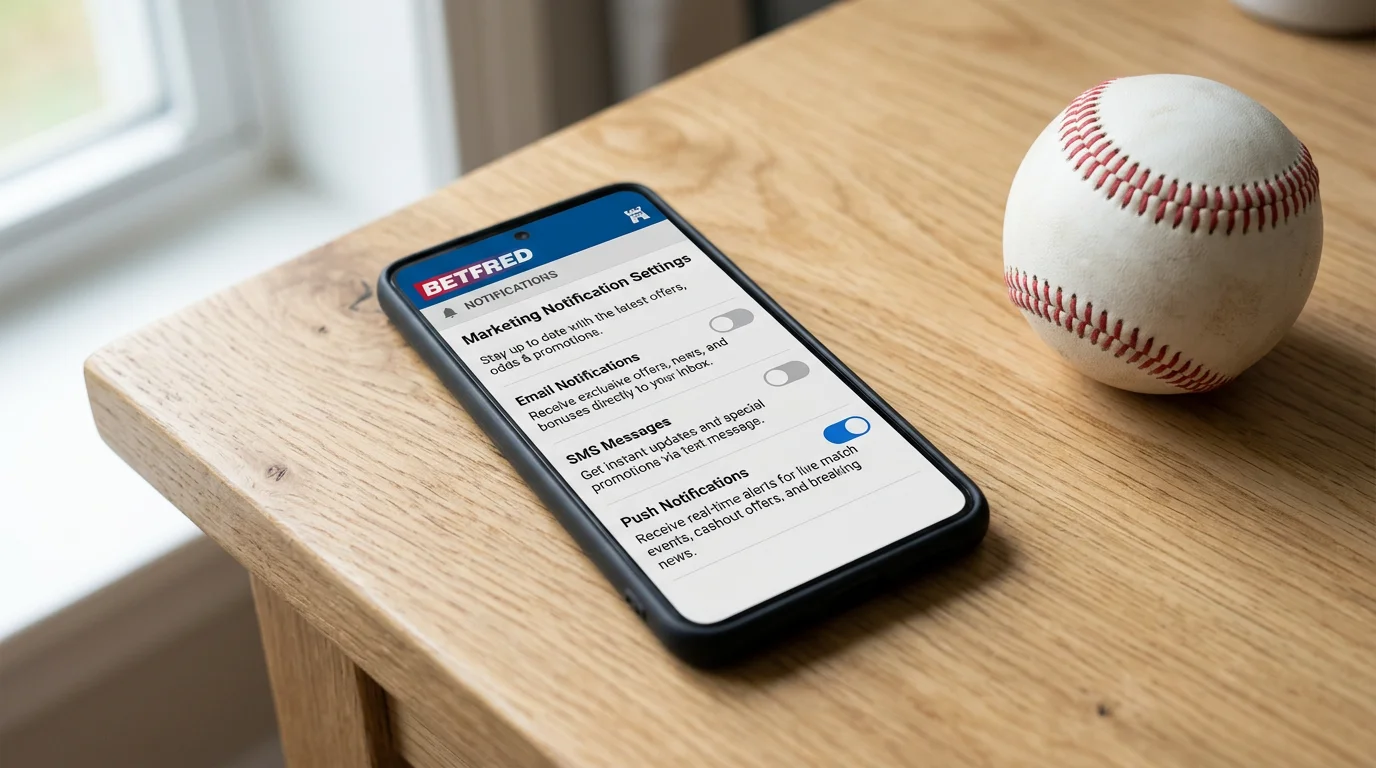
The rule I apply to every betting app on my phone is: settled-bet confirmations on, deposit confirmations on, everything else off. The May 2025 marketing consent rules require granular opt-in for promotional push notifications, so the default position post-2025 is much cleaner than it was previously. But the operator-functional notifications (line movement on watched markets, in-play promotions on bets I have already placed) are also worth disabling unless they map to a specific workflow need.
The behavioural reason matters. A push notification at 11:47 PM UK time saying “Yankees moneyline now 1.85, was 1.91 – bet now” is not arriving at a moment of clean decision-making. The bettor is either already in bed, in the middle of watching another game, or at minimum not sitting down with a fresh analytical mindset. The right response to a price drop is rarely an immediate bet placed via the notification’s deep-link to the slip. The default of disabling those notifications removes the prompt and forces any subsequent bet to come through the bettor’s normal workflow.
Latency and Live Betting
Mobile latency is the technical variable that separates a clean live-betting workflow from a frustrating one. The headline number that operators advertise – sub-second price refresh – is broadly accurate for static markets. Live markets during fast-moving game states (a runner advancing on a passed ball, a pitching change, a late-inning rally) can lag by two or three seconds across operators, and the lag is asymmetric: the operator’s price update is often quicker than the broadcast feed the bettor is watching, which means the screen-state and the bet-state can disagree at exactly the wrong moment.
The practical compensation is to bet on the screen state, not the broadcast state, when placing live bets. If the app shows a Yankees moneyline price of 1.85 and the broadcast is showing the previous half-inning, the price reflects information the broadcast has not yet conveyed. Either the bet is placed quickly at the available price (accepting that the bettor is acting on stale visual information) or the bet is held until the broadcast catches up. The mistake is to assume the price will hold while the bettor processes the broadcast picture.
5G networks have improved the latency picture meaningfully in urban UK environments. Central London and Manchester both have strong 5G coverage by 2026, and the practical latency for a 5G-connected mobile MLB bettor is substantially better than it was in the pre-5G era. The 2:36 pre-pitch-clock pace and 2:40 post-pitch-clock pace per pitch matter here too: the faster game pace compresses the time window for live decisions, and a slow connection eats into that window in absolute terms.
Worked Example: A Live Bet on a Mobile App
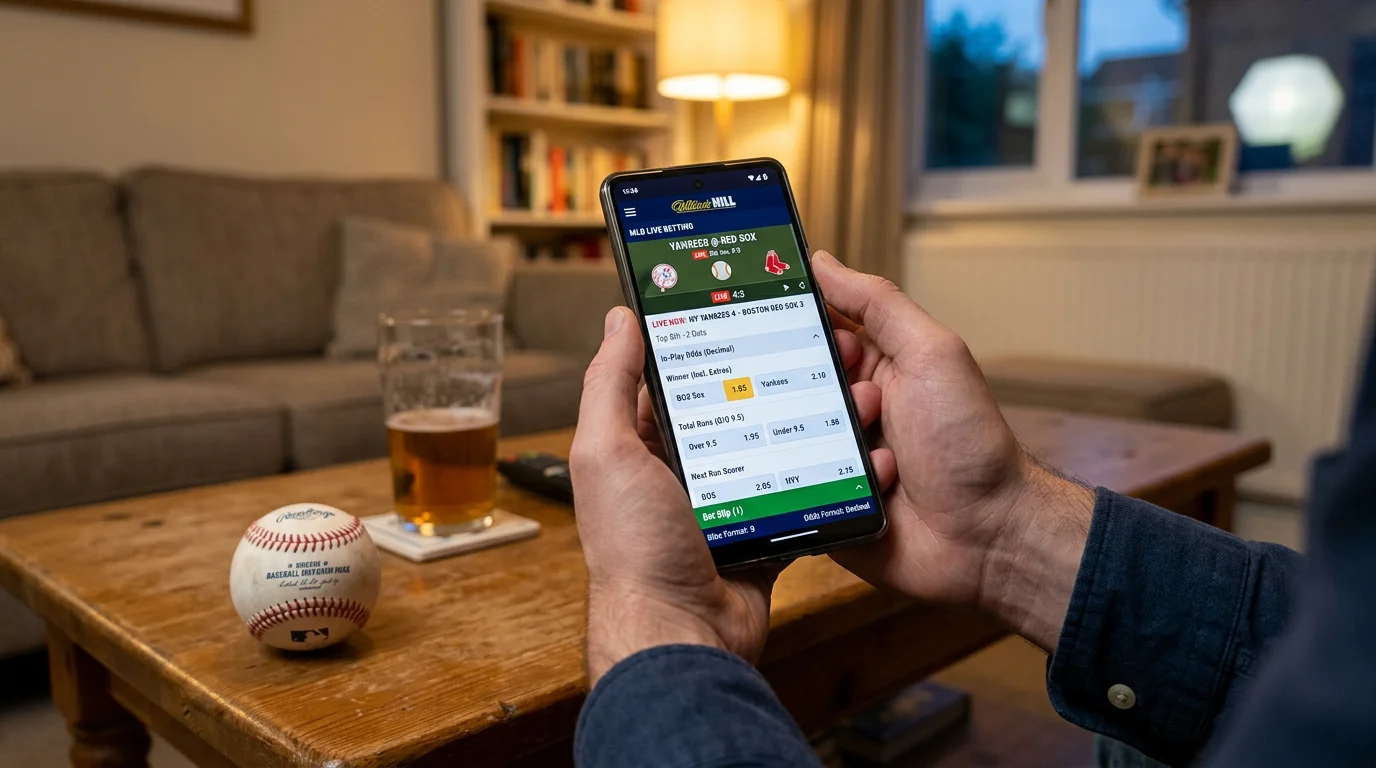
Suppose it is 1:47 AM UK time, the bettor is watching a Yankees-Red Sox game in the seventh inning, and the Yankees have just loaded the bases with one out. The live moneyline on the Yankees has dropped from 1.91 (pre-pitch) to 1.78 (after the bases-loading walk). The bettor’s phone shows the price; the broadcast is still on the walk replay.
The mechanics of the bet placement on a typical UK-licensed sportsbook app are: tap the live-betting tab, tap the game, tap the moneyline price, enter the stake (£25 in this case), confirm the slip, settle. The full sequence runs in around six seconds on a clean app, perhaps ten on a slower connection. The price displayed at slip-confirmation is the price the bet is taken at, not the price displayed on the moneyline tile.
The implied probability at 1.78 decimal odds is 56.18 percent. The bettor’s own assessment of the Yankees’ probability of winning the game from this base-loaded state in the seventh inning is, say, 62 percent (using bullpen ERA, on-deck batter, and recent run-environment data). The implied edge is 5.82 percentage points, and the £25 stake produces an expected value of approximately £1.46 if the assessment is accurate. The bet is placed.
The post-bet workflow on the mobile app includes the settled-bet notification (one of the few push notifications worth keeping on), which arrives within five seconds of the game settling at the operator’s clock. The bettor’s review log captures the bet within thirty seconds of settlement: stake, odds, probability assessment, outcome, edge, win or loss. The mobile workflow makes the post-bet review faster than the desktop equivalent because the app has the bet record already loaded, the camera or notes app captures any additional context, and the review can happen while the next at-bat unfolds.
The Discipline Checklist
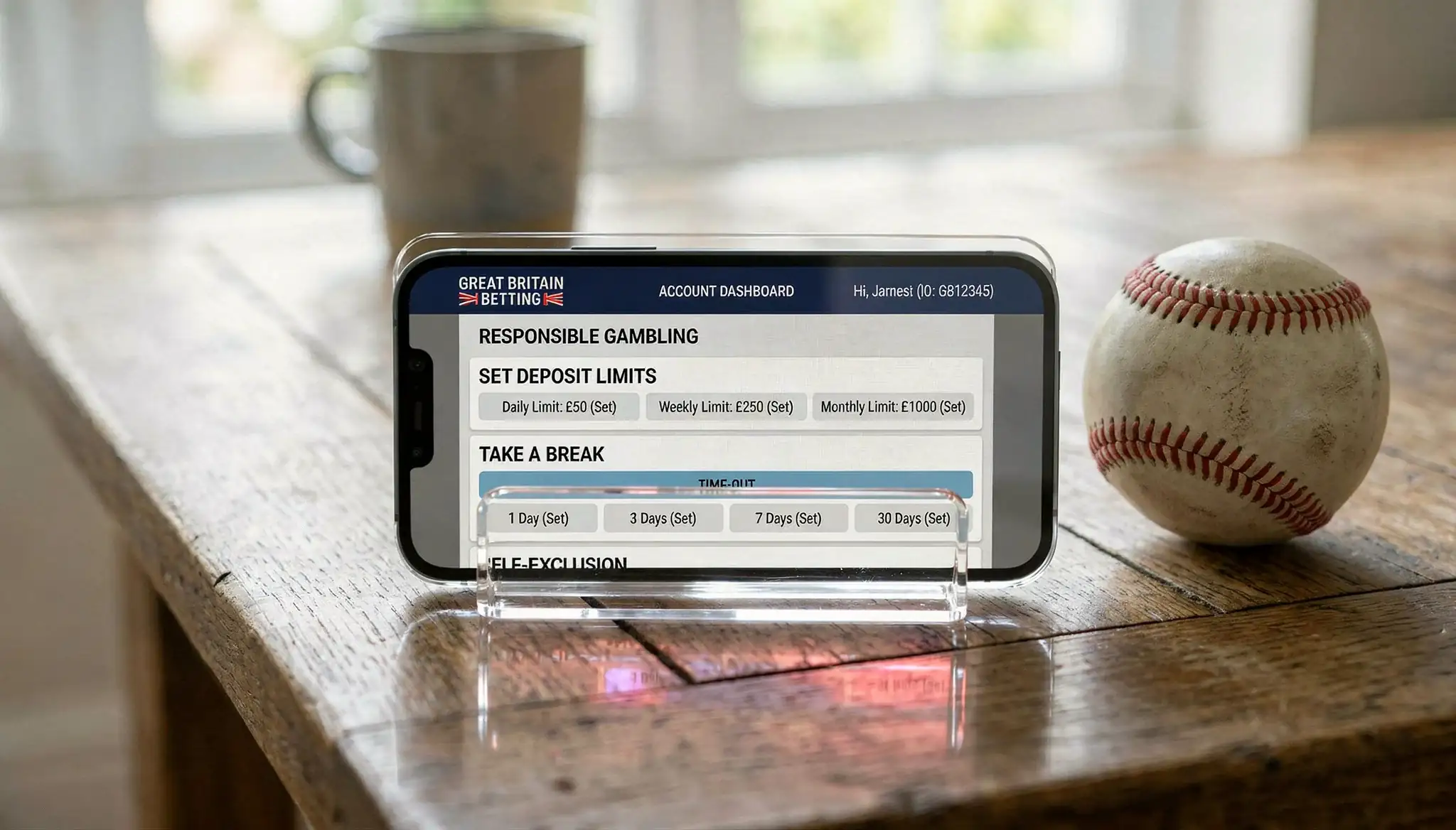
The mobile workflow’s convenience is also its risk. A bettor who can place a £100 stake in six seconds is a bettor who can place a £100 stake in six seconds at 2 AM with poor analytical preparation. The discipline structure that the workflow needs sits in the account settings (deposit limits, time caps, granular consent), not in the bet placement flow itself.
The pre-session checklist I keep on my phone is short. Are deposit limits in place? Yes. Is the session time cap set? Yes. Are the marketing notifications off? Yes. Is the bankroll allocation for tonight’s slate written down before the session starts? Yes. The checklist takes thirty seconds. With it in place, the mobile workflow is structurally safe. Without it, the same workflow is a permanent risk surface.
The mobile workflow is also where bankroll review happens most reliably. The phone’s bet history is searchable, exportable to a spreadsheet, and visible in two seconds when reviewing a question about a previous bet. The desktop workflow, by contrast, requires opening a browser, logging in, navigating to the bet history page – friction that means the review actually happens less often. The phone is the natural location for the disciplined record, not just the placement.
Battery and Connectivity Realities
One unglamorous detail. A mobile MLB betting session at 1 AM UK time, watching a game on a tablet while line-shopping on a phone, places real demand on battery and connectivity. A bettor whose phone runs out at 2:30 AM with a live position open and a settlement pending has a reduced ability to react if the position moves. The practical fix is a charging cable within reach during any extended session and a backup connection (mobile data plus home Wi-Fi) so that a router glitch does not interrupt a live-bet workflow.
Operators will accept the bet at the price the system records, but if the connection drops between tap and confirmation the bet may not register. Most apps now show a clear “bet placed” or “bet failed” state within five seconds, and any ambiguity should be resolved by checking the bet history rather than re-attempting the bet. Double-betting through connection retries is a category of error that the disciplined bettor avoids by checking the history before re-trying.
Common Questions on Mobile MLB Betting
Two questions come up most often when I discuss the mobile workflow with UK MLB bettors who want to optimise their setup.
Are UK sportsbook apps actually faster than mobile browsers for MLB?
Native apps have a small but consistent speed advantage, particularly for live-market price refresh during fast-moving game states. The gap has narrowed over the past three years (mobile browsers have caught up on most static functionality), but for live betting on time-sensitive markets like in-play moneylines and totals, the native app typically refreshes prices a half-second faster. For pre-match betting and line-shopping the difference is negligible, and many disciplined UK MLB bettors run a hybrid setup: app for the primary operator, mobile browser for the others used in line-shopping.
How do I disable a push-notification habit without losing line-shopping?
Disable promotional push notifications via the May 2025 granular consent settings on each operator account. Disable line-movement and in-play promotion notifications via the app’s own notification settings. Keep settled-bet and deposit confirmations on. Then move line-shopping to a deliberate ninety-second routine before each bet placement, rather than reacting to push prompts. The line-shopping happens at the moment of the bet, not in response to a notification, so the discipline structure stays intact while the convenience of mobile placement is preserved.
Prepared by the Betting on Baseball Tips editorial staff.