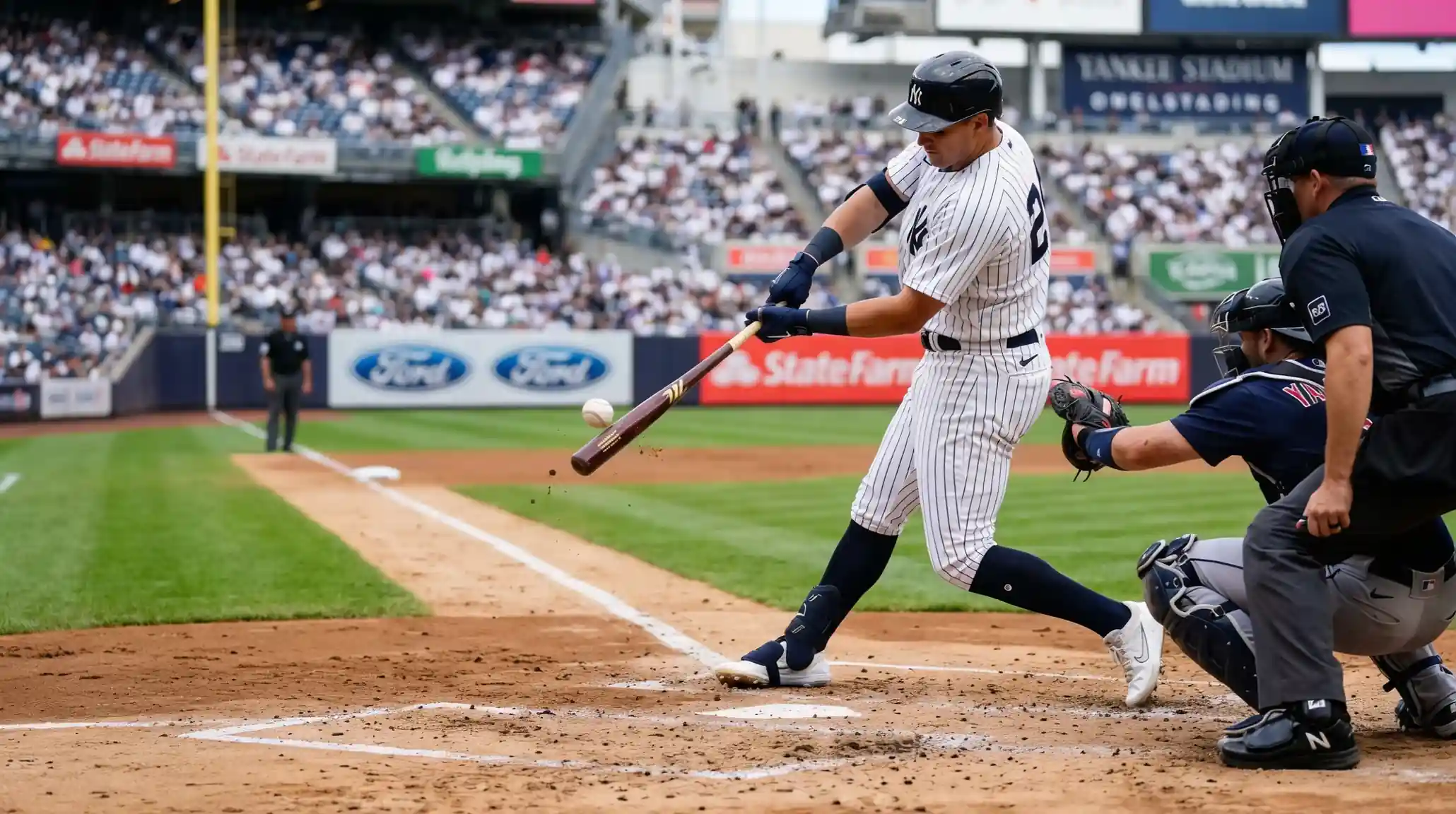
MLB Run Line Betting: Strategies for the 1.5 Spread
 Available in US

Table of Contents
- Understanding the 1.5 Run Line Spread in MLB Betting
- How Run Line Settlement Actually Works
- Backing the Favourite at –1.5: When the Maths Agree
- Taking +1.5 with the Underdog: The Insurance Trade
- Alternate Run Lines at –2.5 and +2.5: Niche Edges
- How Weather and Bullpen Quality Bend the Run Line
- Starter Quality and the Run Line Price
- Rain-Shortened Games: How UK Bookmakers Grade Run Lines
- Worked Example: A £25 Run-Line Decision in Decimal Odds
- Three Mistakes That Quietly Kill Run-Line Bankrolls
- Run Line Questions UK Bettors Ask Most
- Where the Run Line Earns Its Keep
Understanding the 1.5 Run Line Spread in MLB Betting
The first time I tried to “explain” the run line to a friend in a Camden pub, I drew it on the back of a beer mat and got the maths wrong. Seven years later I have a much tidier version of that beer mat — and a bankroll that no longer pretends 1.5 is just a friendly round number some MLB executive picked out of a hat. It is the most quietly mathematical line in baseball.
The structural fact that anchors everything else: roughly 30 per cent of all MLB games end with a one-run margin. Over a 162-game schedule, with 2,430 regular-season fixtures across the league, that means about 729 games every year that flip on a single base, a single throwing error, a single squeezed strike call. The 1.5 line is calibrated to slice that distribution almost exactly down the middle of the meaningful tail. It is not a coincidence — it is the only spread that produces sharp, balanced action without collapsing into a coin-flip with juice.
When I sit down with the slate at half past midnight UK time, I am not really asking “who wins?”. I am asking “by how much, and how confident is the market that the margin lasts past the eighth inning?”. That second question is the run line. It rewards you for being right about tempo, not just about outcome. A favourite at decimal odds of 1.65 on the moneyline might land you at 2.10 on the run line — same team, same plan, completely different price for being right about how the game ends, not just who wins it.
This workshop walks through the spread the way I learned to read it on the desk: mechanics first, then the favourite side, then the underdog insurance trade, then the alternate spreads where the niche edges live. Weather, pitching, rain rules, a worked £25 example, the three mistakes I see UK punters make every week, and a tight FAQ. All odds in this piece are British decimal — 2.10, not +110.
To accurately calculate your potential returns on the 1.5 spread, you must first master the decimal and American odds conversion process.
How Run Line Settlement Actually Works
The cleanest way to learn run-line settlement is to watch one bet you were sure of fall apart in the ninth. Mine was a favourite up 4-1 going into the bottom of the ninth, and the closer turned a routine save into a 4-3 squeaker on a leadoff double, a wild pitch and a bloop single. Moneyline backers cashed. Run-line backers, including me, did not. That two-run cushion is the entire point of the spread.
The mechanics are deceptively simple. The favourite is laid –1.5, meaning they must win by at least two runs. The underdog is given +1.5, meaning they either win outright or lose by no more than one run. Final score 6-4? –1.5 cashes, +1.5 loses. Final score 6-5? –1.5 loses, +1.5 cashes. There are no half-runs in baseball — the .5 exists to eliminate ties at settlement, not to suggest a real fractional outcome.
Two settlement details trip up newcomers. The first: extra innings count in full. A game that goes 4-4 through nine and ends 5-4 in the eleventh settles as a one-run game, regardless of how it got there. The second: the run line is graded on the official final score, which can include a run scored on a walk-off where the rest of the half-inning is not played. Phantom runs that “would have scored” do not exist in your bookmaker’s settlement engine.
UK-licensed sportsbooks all settle run lines using the official MLB box score, usually within minutes of the final. There is no judgement call. The exception is a rain-shortened game, which gets its own section below.
One operational point worth committing to memory. If you place a run-line bet on the listed pitcher and that pitcher is scratched before first pitch, most UK books will void the wager and return your stake. Some books offer “action” pricing where the bet stands regardless. Read the rule before you stake, not after — it is the kind of small print that turns a winner into a void on a Tuesday morning. Run-line settlement is binary, brutal and based entirely on the final official score. Treat the half-run as a tempo dial, not a margin of safety.
Backing the Favourite at –1.5: When the Maths Agree
Picture this — a 1.55 moneyline favourite. The market thinks they win roughly 65 per cent of the time. Sounds tidy, except you are paying –£18 for every £10 you stake to win. Stretch that across a 200-bet sample at a real edge, and the variance still eats you alive on a bad week. This is the structural problem the run line is built to solve, and the reason backing –1.5 is the most under-priced trade I take all season.
If 30 per cent of games end with a one-run margin, then by definition the other 70 per cent end with a margin of two or more — and within that 70 per cent, the heavy favourite wins the lopsided ones far more often than not. Not all margin distributions are equal: a 1.45 favourite at home with an ace pitcher is not the same animal as a 1.45 favourite limping into the third game of a road series.
The price comparison matters more than the abstract probability. A 1.55 moneyline favourite often shows up at 2.05–2.20 on –1.5. The market is essentially telling you “we think this team wins, but we are not confident they cover by two.” If you can identify the games where that confidence is mispriced, you are paying a fair price for a measurable edge.
Three structural conditions tilt me toward laying –1.5. First, a top-quartile starter facing a bottom-quartile lineup, especially against an opposing rotation that thins out by the fifth. Run lines reward starters who go deep, because every inning of bullpen exposure is an inning where a one-run lead can become a one-run loss. Second, a strong opposing reliever group is a quiet disqualifier — you can be ahead 4-2 in the seventh and still get pulled back to a 4-3 in the ninth. Third, weather that compresses scoring favours the team with the better starter going seven-plus.
The number I check against my gut is implied probability. At 2.10 decimal, the market is pricing the –1.5 cover at 47.6 per cent. If my read of the matchup says cover probability is 52 per cent or better, I have a positive expected value. If it is 49 per cent, I pass. The rule I keep on my desk: lay –1.5 when both the starter goes seven-plus and the bullpen behind has a top-ten league ERA — otherwise, the moneyline is the cleaner trade.
Taking +1.5 with the Underdog: The Insurance Trade
I once watched a +1.5 ticket cash because the underdog scored on a passed ball with two outs in the ninth. Final score 3-2. The losing team did not “play well”, they just stayed within touching distance — and that is what +1.5 is actually pricing. The underdog spread is not a bet on victory. It is an insurance policy that pays as long as your team does not get blown out.
The +1.5 is one of the most poorly understood positions in MLB betting, mostly because punters who back it expect to feel clever about picking winners. You will not. You will feel mildly relieved every time your team loses by one. That is the entire emotional shape of the trade.
The structural fact is the same 30 per cent one-run rate, viewed from the other side. If 30 per cent of games end by one run, and roughly 35–40 per cent of those one-run games go to the underdog outright, the +1.5 cashes on every outright underdog win plus every one-run favourite win. That is usually somewhere between 60 and 65 per cent of games for a moderate underdog.
The price reflects exactly that. A team at 2.40 on the moneyline often appears at 1.55–1.65 on +1.5. You are taking shorter odds in exchange for a much wider safety net. The trade is mathematically sound when two conditions hold: the underdog has a starter who can keep the game close into the sixth, and the favourite’s bullpen has a recent record of letting late leads get squeezed.
The matchups I actively hunt for +1.5 are road favourites visiting tight ballparks with a competent underdog ace on the mound. Home underdogs in this profile cash the spread at remarkable rates because tight parks suppress the late-inning slugging that turns 4-3 games into 6-3 games. The other angle is the divisional rematch — teams that have played each other a dozen times in a season produce more close games than spreads usually anticipate.
One trap: avoid +1.5 on a tired underdog bullpen with a starter pulled by the fifth. The downside risk on +1.5 is the late-inning blowout, where a one-run game becomes a four-run rout in the eighth. The desk rule: take +1.5 when the underdog starter projects to give you five quality innings and the home park leans pitcher-friendly. Otherwise, leave it.
Alternate Run Lines at –2.5 and +2.5: Niche Edges
What if the standard 1.5 line just sits in the wrong place for the matchup you are reading? Most UK-licensed sportsbooks now publish alternate spreads of –2.5 and +2.5 alongside the 1.5, sometimes –3.5 and +3.5, and these niche markets are where serious value occasionally hides in plain sight.
An alternate run line shifts the spread away from the structural midpoint and rebalances the price accordingly. Lay –2.5 instead of –1.5 and you need your favourite to win by three or more, but the price stretches from a typical 2.10 to something closer to 3.20 or 3.50. Take +2.5 with the underdog and you need them to lose by one, two, or win outright — the spread covers more outcomes, but the price compresses to 1.30 or shorter.
The –2.5 angle works in two specific situations. The first is the high-total matchup where the favourite’s offence is significantly deeper than the underdog’s. If the line is over 9 runs and the favourite carries a top-five team wOBA against a bottom-five rotation, two-run wins are the central tendency. The second is the lopsided bullpen game. When the underdog has openly poor late-inning relief, late innings turn into innings where a 3-1 game becomes 5-1 fast.
The +2.5 underdog spread is a different beast. I take it sparingly because the price is short and the upside is capped. The one situation where it makes sense: heavy road favourite, tight pitcher-friendly park, both bullpens closer to league average. The combination produces a high rate of two-run finishes, and +2.5 at 1.35 turns into an easy cash on the games that do not feature a late-inning blowout.
Alternate spreads sometimes appear at slightly different prices across UK books, and the gap is usually wider than on the standard 1.5 line because fewer punters bet them. If you are willing to line-shop, you can occasionally find –2.5 at 3.30 on one book and 3.75 on another for the same game. That price difference, compounded over a season, is the difference between a flat year and a profitable one. Alternate spreads are tools for matchups where the standard 1.5 mispriced reality, not lottery tickets to be sprayed across a slate.
How Weather and Bullpen Quality Bend the Run Line
Weather is the single most underweighted variable on the run line, and I can prove it in one number. League-wide data shows that when the wind blows toward left field, team runs go up by 5.8 per cent and home runs by 7.6 per cent compared with the average — and gusts of 16 mph or more push the home-run figure to a 10.7 per cent rise. That is a margin shift large enough to flip a –1.5 cover from probable to a genuine coin flip.
The mechanism is simple. The run line cares about scoring distribution, not just total runs. A wind-out day at any park does not just lift the over — it widens the variance of final margins, which means more two-run wins and fewer one-run squeakers. If you are laying –1.5 on a wind-out day, you are getting paid to capture more of those wider margins.
The opposite is also true. Cool, damp evenings with an in-blowing breeze compress scoring and bunch finals around one-run margins. A 4-3 game is the most common one-run outcome in MLB by a wide margin, and weather-suppressed nights produce them at a noticeably higher rate than warm, dry afternoons. On those nights, +1.5 underdogs become the cleaner trade.
Bullpen quality is the other lever. A favourite with a top-tier bullpen survives the cool-night, one-run-lead scenario at much higher rates than a favourite with a shaky middle relief group. The bullpen is the bridge between the starter you trust and the closer you tolerate — and on run-line settlement, the seventh inning matters more than the third.
What I do at the desk is brutally practical. I check the forecast for first pitch, the wind direction at game time and the bullpen ERA over the last 30 days for both sides. If the favourite has a bullpen running an ERA over 4.20 and the wind is blowing in, I am off –1.5 entirely. If the wind is out and the bullpen is solid, the lay is the cleaner side. Weather sets the variance, the bullpen converts it. Read both before you stake.
Maximize your bankroll efficiency by following the strategies outlined on DIAMONDLINE throughout the entire season.
Starter Quality and the Run Line Price
The single most important graph I drew in my first year reading lines was the relationship between starter quality and run-line cover rate, and the conclusion was unflattering to my early bets. Backing –1.5 with a mediocre starter is the closest thing to setting fire to a tenner I have found in this market. The price looks generous because the moneyline is short — and the moneyline is short for the wrong reason.
Pitch clock changed the conversation in a way most run-line punters still have not internalised. After the rule was introduced, the average runs per game in MLB rose from 8.6 to 9.2, and stolen-base attempts climbed from 1.4 to 1.8 per game. That sounds like an offence-friendly shift, but the academic work that followed told a more interesting story. The Clemson empirical analysis of pitch clock data found that home runs declined by an average of four per season and walks by eleven, with no statistically significant change in earned run averages, hit-by-pitches or elbow injuries. Pitchers, on average, threw fewer of the pitches that hurt them most.
What that means for the run line is subtle. Pitchers who execute under the clock — strikes early, walks low, deeper outings — produce smaller bullpen exposure and tilt the run line toward the favourite. Pitchers who struggle with the clock push the game into the bullpen earlier and widen the chance of a one-run finish.
I now check three pitching numbers before any –1.5 wager: average innings per start, walk rate over the last five outings, and bullpen ERA behind the starter for the last 30 days. If the starter averages under five innings, walks more than 3.5 per nine, or has a bullpen behind him with a 30-day ERA over 4.50, –1.5 is structurally the wrong side. The price reflects the moneyline edge, not the cover edge — and on the run line, only the cover edge gets paid.
The opposite read is just as actionable. A starter going seven-plus innings, walking under 2.5 per nine, with a top-five bullpen behind him, is the profile that produces consistent two-run wins. Those are the games where 2.10 on –1.5 is genuinely positive expected value. The principle: the moneyline pays you for picking the winner, the run line pays you for picking the tempo.
Rain-Shortened Games: How UK Bookmakers Grade Run Lines
The first time I lost a run-line ticket to rain, I argued with the bookmaker’s chat agent for forty minutes before realising the settlement was correct and I was the one who had not read the rules. The rain-shortened rules across UK-licensed sportsbooks are tighter than punters expect, and they vary by book.
The general framework, as applied by most UK books, is the official MLB rule. A regulation game requires five complete innings — four-and-a-half if the home team is leading — and once that threshold is met, the final score stands and the run line settles on it. If the rain hits before the threshold, the game is suspended and resumed; if rain prevents completion within the league’s window, the game is scored as it was at the last completed full inning. Some UK books deviate, requiring nine innings for run-line action and refunding the stake otherwise.
The practical implication is that rain-shortened games tend to produce tight finals. Five and a half innings is rarely enough time for blowouts to develop fully, which means a –1.5 ticket that looked promising in the third inning often grades to a one-run loss in the seventh.
The empirical context matters here. Morgan Sword, MLB’s Executive Vice President of Baseball Operations, observed during the pitch clock rollout that the league had spoken to minor-league players and coaches about the impact of shortened games and that the early concern about a quicker pace causing arm injuries had not materialised — if anything, injuries were down a touch. The minor-league data on shorter games gave the league confidence that pitchers could handle the compression. For run-line punters, the implication runs the other direction: shorter games, whether by clock or by rain, compress the margin distribution and make spreads harder to cover.
The desk-level rule is straightforward. Check the forecast at first pitch, not the morning before. If the radar shows a high probability of stoppage in the middle innings, scratch the run line entirely. Read your book’s rain rule once, write it down, and stop arguing with chat agents about settlements.
Worked Example: A £25 Run-Line Decision in Decimal Odds
Let me show you exactly how I price a run-line decision on a Tuesday afternoon, because the abstraction stops being useful the moment you have to put money down. This is a worked example with safe, generic teams — call them Team A as home favourite and Team B as road underdog.
The market: Team A moneyline at 1.55, Team B at 2.55. Team A run line –1.5 at 2.10. Team B run line +1.5 at 1.72. The total sits at 8.5. My stake is £25, fixed, no parlays.
Step one is the implied probability check. At 2.10 decimal, the implied cover probability for –1.5 is 1 ÷ 2.10 = 0.476, or 47.6 per cent. To make this a positive EV bet, my read of the matchup needs to put the true cover probability at 50 per cent or higher. Anything between 47.6 and 50 is break-even after vig and not worth the variance.
Step two is the cover-rate model — five inputs scored out of three. Starter quality (top quartile in IP per start, low walk rate): 3 of 3. Bullpen ERA over last 30 days under 3.80: 2 of 3. Opposing offence wOBA in bottom third of league: 3 of 3. Park factor neutral to slightly pitcher-friendly: 2 of 3. Weather, no wind out, mild evening: 2 of 3. Total: 12 of 15, which in my historical tracking maps to roughly a 53 per cent cover rate.
Step three is the EV calculation. With cover probability at 53 per cent and a price of 2.10, the expected return on a £25 stake is (0.53 × £25 × 1.10) − (0.47 × £25) = £14.575 − £11.75 = £2.83 expected profit per bet. That is a 11.3 per cent edge — generous by run-line standards.
Step four checks alternatives. Could I get better value backing the moneyline at 1.55? Implied probability at 1.55 is 64.5 per cent — my win-rate read on Team A is roughly 62 per cent. The moneyline is actually a small negative EV. The –1.5 is the cleaner trade.
Step five is the discipline check. Stake remains £25 regardless of “feel”. I do not double up because the analysis “looked strong”. The flat-stake commitment is the only thing keeping the variance survivable across a 200-bet sample. The worked example is not the bet — it is the habit of pricing the bet before staking.
Three Mistakes That Quietly Kill Run-Line Bankrolls
Every season I have a moment in late July where I look back at the spring’s losing tickets and notice the same three patterns. Not bad luck — actual repeated errors, in order of how much money I have lost to them.
The first is treating the run line as a moneyline upgrade. “I like this favourite, –1.5 pays better, so I will lay –1.5.” That is the logic of someone who has not internalised that the moneyline and the run line are pricing two completely different questions. The moneyline asks who wins. The run line asks by how much. A team can be a strong moneyline favourite and a poor –1.5 cover candidate at the same time, and most amateur losses come from collapsing those two questions into one.
The second is ignoring the bullpen as a pricing input. UK punters who follow MLB casually check the starter, see an ace, lay –1.5 with confidence, and then the seventh inning arrives and the middle relief group implodes. Bullpen ERA over the last 30 days is a five-second check that prevents at least one bad bet a week.
The third is the inning-prop rabbit hole that turns into a run-line distraction. Punters notice the first five innings line, see NRFI and YRFI props, and start mixing inning-level bets with full-game run-line bets without separating the bankrolls. The two markets price different windows. If you want to play inning-level prop logic, treat it as its own market with its own bankroll, not as a hedge on the run line.
With about 30 per cent of MLB games ending by one run, the punter who consistently lays –1.5 without grading the cover-specific factors is paying full price for half the outcome distribution. That maths does not improve with confidence. It improves only with disciplined matchup reading and a tracking sheet that exposes your actual cover-rate accuracy across a season.
Run Line Questions UK Bettors Ask Most
Three questions land in my inbox more than any others when the season is in full swing. Here are the answers, kept short and direct.
The rain-shortened question depends on your book — but the dominant UK practice follows the official MLB regulation game rule. If a game reaches five complete innings, or four-and-a-half with the home team leading, and is then called for weather, the run line settles on the score at that point. Some books require the full nine innings before run-line action stands. The same final score can grade differently across operators.
The –1.5 heavy-favourite question comes up almost weekly. Yes, it can be profitable long-term, but only when the matchup conditions stack: the right starter profile, a competent bullpen, a neutral or favourable park, and absence of structural risk. The trade is positive EV roughly 30–35 per cent of the time it is offered, which means you are passing on the majority of nights.
The alternate run line question gets asked because the spreads look exotic. Alternate spreads at –2.5 or +2.5 are simply the same run-line market shifted off the structural midpoint. The –2.5 spread is genuinely useful when offence and bullpen mismatches point clearly toward a multi-run win, and the +2.5 spread is useful in pitcher-friendly parks. Neither should be treated as a default — they are precision tools for specific matchups.
How are run line bets graded if a baseball game is shortened by rain?
Most UK-licensed sportsbooks follow the official MLB regulation game rule. If five complete innings are played, or four-and-a-half with the home team leading, the run line settles on the score at the point the game was called. Some books require the full nine innings for action, refunding the stake if shortened. Always read the specific rain rule on the book you are using before staking.
Is –1.5 on a heavy favourite ever a profitable long-term play?
Yes, but only when matchup conditions align. A heavy favourite at –1.5 covers consistently when the starter goes deep into games, the bullpen behind has a top-ten league ERA, the opposing offence ranks in the bottom third by wOBA, and weather is neutral or pitcher-friendly. Without these conditions, the price reflects the moneyline edge rather than the cover edge, and laying –1.5 becomes a poor long-term trade.
What is an alternate run line and why do UK bookmakers offer it?
An alternate run line shifts the spread away from the standard 1.5, typically to –2.5 or +2.5, with prices adjusted accordingly. UK books offer them because punter demand exists for both more aggressive lay positions and tighter underdog insurance. The –2.5 line is useful when offence and bullpen mismatches point clearly toward multi-run wins, and the +2.5 line works in pitcher-friendly parks. Neither is a default play, both are precision tools for specific matchups.
Where the Run Line Earns Its Keep
If you take one habit away from this workshop, let it be the cover-rate question. Every run-line ticket I place starts with the same three-second check: am I pricing the winner, or am I pricing the tempo? The market makes more sense the moment you separate those two questions.
The run line is a tempo bet. It pays you for being right about how the late innings unfold — about whether a starter goes seven, whether a bullpen holds, whether the wind helps or hurts, whether a one-run cushion stretches to two. None of that is moneyline information. All of it is run-line information. The punters who treat the spread as a moneyline upgrade lose. The punters who treat it as an independent question, with its own inputs and its own price discovery, find the small repeatable edges that matter across a 162-game season.
Created by the ”Betting on Baseball Tips” editorial team.