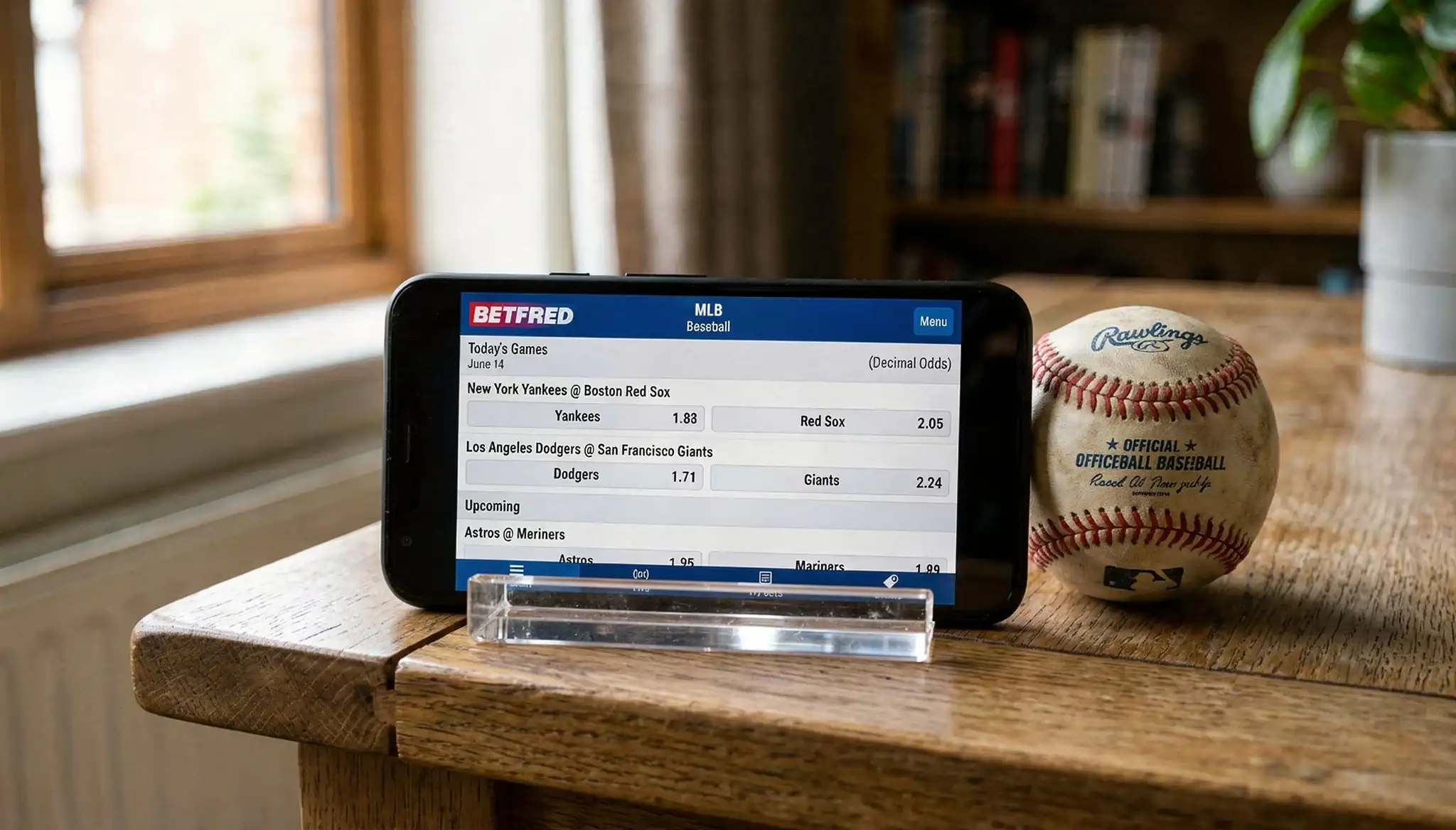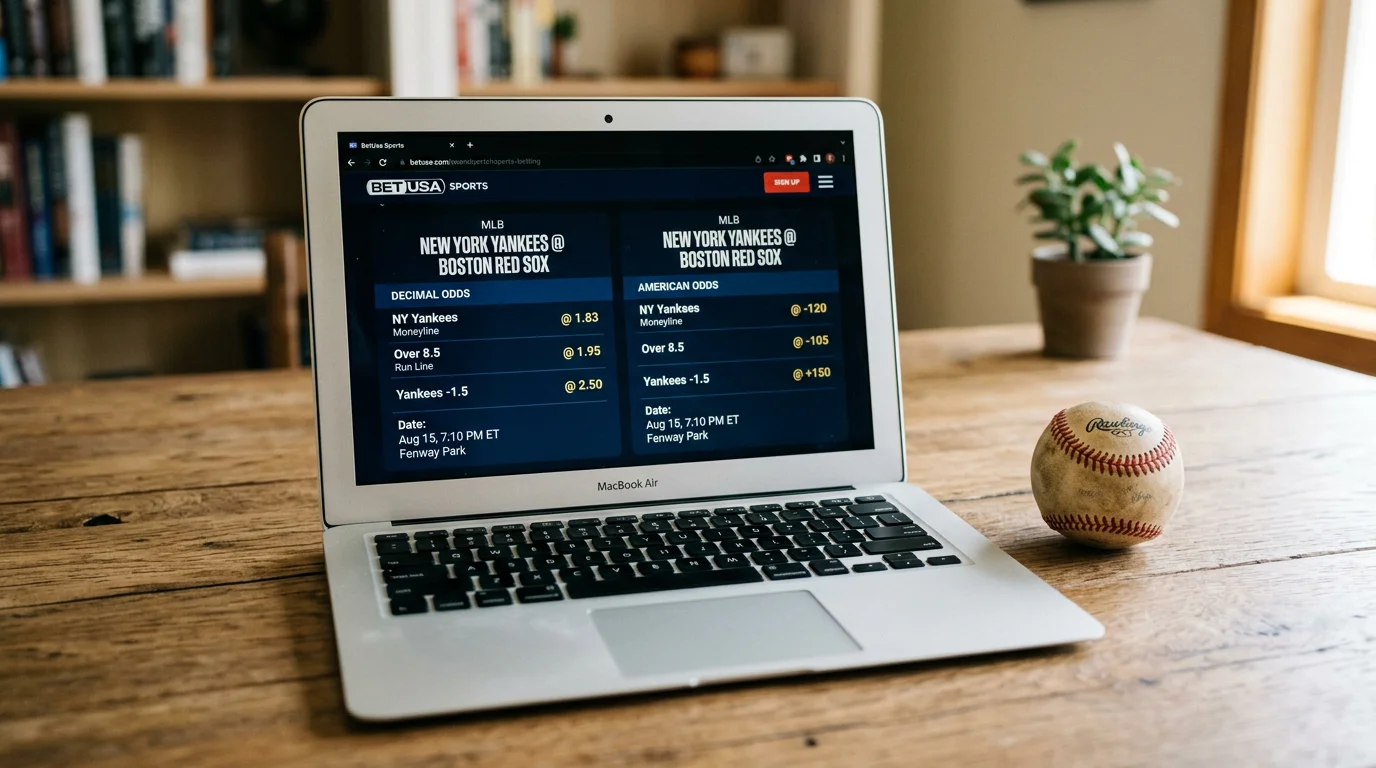
MLB Line Shopping UK: Decimal Odds Comparison
 Available in US
MLB Line Shopping: Tracking UK Sportsbook Margins
I once placed an MLB run-line bet at decimal 1.94 without checking another book. A friend in the same group chat placed the identical position 90 seconds later, having checked four UK operators, and got 2.05. We both won. He earned £55 more on £500 staked. That single missed comparison cost me roughly the equivalent of two weeks of carefully chosen bets. I have not skipped the comparison since.
The UK gambling industry generated £16.8 billion in gross gambling yield (GGY) across April 2024 to March 2025, with the Remote Casino, Betting and Bingo sector accounting for £7.8 billion of that figure. The competitive infrastructure that produces those numbers is the same infrastructure that produces decimal-odds variation across UK-licensed sportsbooks. Books compete for the same punters, but they trade with different liquidity, different positions, different risk appetites, and different live-modelling assumptions. The result is that the same MLB market priced across five UK books on a typical evening rarely shows fewer than three distinct decimal-odds figures, and the gap between the best and worst of those figures is often substantially larger than the punter’s expected edge on the position.
Line shopping – the discipline of comparing decimal-odds across multiple operators before placing every position – is the single most consistent edge available to a UK MLB punter. It requires no analytical skill, no model, no insider information. It requires a routine of checking three to five books before pressing the bet button on every position, and it converts directly to long-term return-on-investment. This guide pulls apart the margin patterns that vary across UK books by market type, the tools that make the comparison frictionless from a UK location, the 90-second pre-bet routine I run every evening, and a worked example of how the discipline compounds across a full season.
Margin Patterns by MLB Market Type
Different markets carry different margin baselines, and different UK books prioritise margin compression on different markets. Understanding the typology is the first step to spotting where line shopping pays best.
Moneyline markets across UK books typically run at the tightest margins of any MLB product. The total margin (the implied-probability surplus that goes to the book) on a typical MLB moneyline sits between 3 and 5 percent. The variation across UK operators on a given moneyline is usually one to three decimal-points (for example 1.91 vs 1.94), which translates to between 1.5 percent and 4 percent improved expected return per bet. Across hundreds of moneylines a season, the cumulative effect is substantial.
Run-line markets carry margins between 5 and 7 percent and show wider operator variation than moneylines. The MLB run-line is fixed at 1.5 because around 30 percent of all matches finish within a one-run margin – a structural quirk that compresses the operator’s natural pricing range and produces visible operator-to-operator differences. The variation on a typical run-line decimal price runs five to ten decimal-points (2.10 vs 2.20), which translates to as much as 7 percent improved expected return on a winning bet. This is the single largest line-shopping payoff among standard MLB markets.
Total markets (over-under) typically carry margins between 4 and 6 percent. Operator variation on totals tends to concentrate in the line itself rather than the price – one book may post 8.5 at decimal 1.91 while another posts 9 at decimal 2.05. The practical line-shopping question on totals is which line is the better mathematical fit for the punter’s projected total, not just which decimal price is higher. Player-prop markets carry the widest margins, often 8 to 12 percent, and the widest operator variation. The trade-off is that prop markets are typically lower-liquidity and lower-stakes, so the absolute pound-value of the line-shopping benefit is smaller per bet even if the percentage improvement is larger.
The book-by-book pattern is also predictable. The major UK retail-floor operators tend to price MLB tightly because volume incentivises them to compete; the smaller specialist operators sometimes offer wider margins on niche markets but tighter margins on prime markets where they want to attract the volume punter. Line shopping discipline does not need to be exhaustive – three to five UK books typically capture 90 percent of the available value variation. A starting framework for the broader UK book landscape that supports the line-shopping decision sits in the UK sportsbook landscape guide.
Tools UK Bettors Use Without Paying
The line-shopping discipline does not require expensive software. Three categories of free or low-cost tools handle the task efficiently from a UK location.
The first category is odds-comparison aggregators. Several free websites pull live decimal-odds from multiple UK-licensed operators on a single page, refreshed every minute or two during pre-match windows and every 10 to 30 seconds during in-play windows. The aggregators do not cover every market type or every operator, but they cover enough of both to support the great majority of UK MLB betting decisions. The aggregator approach takes 30 to 45 seconds per fixture and handles moneyline, run-line, and standard totals comfortably.
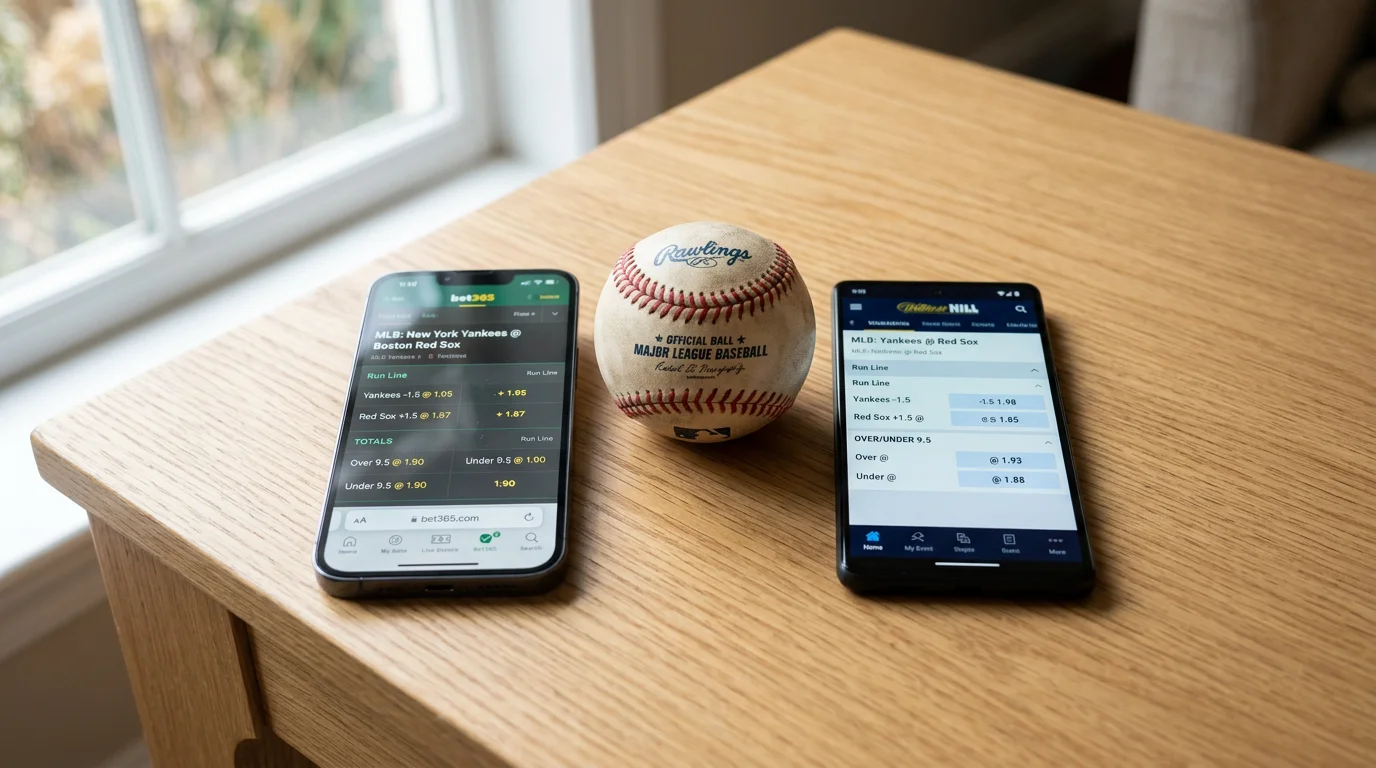
The second category is the operator’s own websites and apps, opened side-by-side in browser tabs or on a mobile device. The manual approach takes longer (90 seconds to two minutes per fixture) but offers two advantages over aggregators: it covers the full range of markets each operator offers (including operator-specific specials and player props that aggregators rarely capture), and it shows the precise pricing including any operator-specific welcome offers, free-bet conditions, or boost campaigns that may shift the effective decimal price on the bet. UK punters who place player-prop positions or operator-specific specials need the manual approach as a complement to the aggregator.
The third category is broker-style services that pool decimal-odds across multiple operators and route the bet automatically to the best available price. These services exist but are less commonly used by UK MLB punters than by horse-racing or football punters, and the value-added compared to the manual two-tab approach is marginal for most MLB use cases. The third-category tools are most valuable for punters placing high stake-counts per evening (15+ positions on a busy slate) where the time saving compounds.
A 90-Second Pre-Bet Comparison Routine
The routine I run before every MLB position has been refined across hundreds of evenings of Premier League and MLB betting. It takes 90 seconds, fits comfortably between the lineup release and first pitch, and produces the line-shopping benefit reliably.
Step one (15 seconds): the position is identified. The punter has decided what bet to place – moneyline, run-line, total, prop. The market and the side (over/under, home/away, etc.) are confirmed. This step happens before the comparison; the punter is not shopping among bets, only among prices for the same bet.
Step two (45 seconds): the comparison itself. The aggregator is checked first to see the spread of decimal prices across the major UK operators. If the aggregator shows a clear winner (one decimal price meaningfully higher than the rest), the operator is selected. If the aggregator shows a cluster of similar prices, the punter opens the two highest-priced operators in browser tabs and confirms the price visually. The 45-second window covers both scenarios comfortably.
Step three (30 seconds): the placement. The bet is placed at the best price identified, the bet-slip is screenshot-saved for record-keeping, and the position is logged in the personal tracking sheet (operator, decimal price, stake, expected outcome, actual outcome – the four data points that produce the seasonal ROI calculation). The 30-second placement window covers any operator-specific bet-slip friction (pop-ups, terms confirmations, deposit checks).
The 90 seconds is the entire ceremony. Punters who skip it on the grounds of “the bet is small” or “the timing is tight” lose value to the discipline gap. Punters who run it consistently capture the line-shopping benefit on every position, and the cumulative effect produces ROI shifts that exceed most analytical edges over a full season.
A Worked Example
Consider a UK punter who places 200 MLB bets across a regular season at an average stake of £100. The pre-shopping average decimal price is 1.91. The post-shopping average decimal price (across the disciplined comparison routine) is 1.96 – a five-decimal-point improvement that is conservative for a punter checking three to five books per bet.
The improvement compounds across the bet count. Without shopping, 200 bets at 1.91 with a hypothetical 53 percent hit rate produces total return of approximately £20,246 against £20,000 staked – a £246 profit, roughly 1.2 percent ROI. With shopping at 1.96, the same 200 bets at 53 percent hit rate produces total return of approximately £20,776 – a £776 profit, roughly 3.9 percent ROI. The ROI improvement from line shopping alone (with no change in bet selection or hit rate) is more than triple the original profit. Across the 162-game season and the punter’s natural betting volume, that compounds to genuinely material money.
The same arithmetic runs in the other direction for punters who skip line shopping. A punter operating at the same hit rate but an average decimal price of 1.88 (the typical price at the lower-margin end of UK book pricing for popular markets) loses ground to vig and produces a small loss across 200 bets. Line shopping is the difference between profitable and break-even MLB betting for many UK punters, and the punter who treats it as optional is the punter who chronically underperforms despite sound bet selection.
Line-Shopping Questions UK Bettors Ask
Two questions dominate the reader inbox on line shopping. One asks whether comparing prices across multiple UK-licensed sportsbooks is legal. The other asks how big the typical gap is on a popular MLB market like the run line. Both deserve direct answers because both shape the daily discipline.
Is line shopping legal across multiple UK-licensed sportsbooks?
Yes, completely legal. UK punters are entitled to maintain accounts at multiple licensed operators and to choose the operator offering the best decimal price for any given bet. The Gambling Commission’s regulatory framework does not restrict cross-operator price comparison; the only restrictions concern things like account-pooling or coordinated betting between accounts, which line shopping does not involve. Maintaining four to six accounts across major UK books is the standard practice for any serious MLB punter.
How big is the typical decimal-odds gap on the MLB run line?
The typical operator-to-operator variation on a standard MLB run line is five to ten decimal-points (for example 2.10 versus 2.20). On a £100 stake, that translates to a £5 to £10 difference per winning bet – a meaningful margin compounded across hundreds of seasonal bets. The run line is the market with the widest operator variation in standard MLB markets because it sits at fixed -1.5/+1.5 spreads, compressing the natural pricing range and producing visible book-to-book differences. Line shopping pays best on the run line.
Published by the Betting on Baseball Tips team.