Listed Pitcher vs Action: UK MLB Betting Rules
 Available in US

MLB Pitcher Changes: Refund Rules and Action Wagers
I have lost two MLB bets to scratched starters in the last 18 months. One was on a £200 listed-pitcher position where the starter pulled out 90 minutes before first pitch and my stake was returned with no opportunity to reposition. The other was on an action position where the replacement starter was a long-relief arm with a 5.80 ERA, and my over bet hit easily but at a price that did not reflect the matchup I had originally bet. Both experiences taught me the same lesson: the choice between listed-pitcher and action terms is not a technicality. It is a structural decision that shapes the risk profile of every MLB bet a UK punter places.
UK bookmakers handle scratched starters in different ways across their product range, and across the 8,254 licensed gambling premises in Great Britain (5,782 of which are betting shops, with the remainder including casinos, bingo halls, and adult gaming centres) the underlying online platforms are not uniform. Some books default to listed-pitcher rules. Others default to action. A few offer punter-selectable options at point of bet placement. The differences are not advertised prominently in pre-match marketing, but they determine outcomes on roughly 8 to 12 percent of MLB fixtures across a season – the rate at which scratched starters occur once injury, rest-day flexibility, and weather-driven schedule shifts are accounted for.
This guide pulls apart the listed-pitcher rule structure, the action option and its risk-reward profile, the late-scratch flow that determines what happens to your stake, and a worked example of how to evaluate which terms suit which betting position. The goal is to give the UK punter a framework that is operationally clear before the next scratched starter arrives.
The Listed Pitcher Rule
The listed-pitcher rule is the simpler of the two terms and the one most UK books default to on standard moneyline and run-line markets. Under listed-pitcher terms, both starting pitchers must take the mound for the bet to stand. If either listed starter is scratched before first pitch, the bet is voided and the stake returned. This is a clean refund mechanism – no pricing exposure, no replacement-pitcher uncertainty – and it is the appropriate default for any pre-match position whose value depends on a specific starting-pitcher matchup.
The voiding window varies slightly by book but generally extends from the time of bet placement until the first pitch is delivered. Once first pitch is thrown, the bet stands regardless of subsequent pitcher developments – if a starter is removed in the first inning due to injury, the bet does not void. This is the operational asymmetry that UK punters need to understand: listed-pitcher protection covers the pre-match scratch, not the in-game injury.
The 162-game MLB regular-season schedule across both leagues, totalling 2,430 games at the league level, produces dozens of scratched starters across each season. The listed-pitcher rule activates on every single one of those scratches. UK punters with bets across multiple fixtures on a given evening can experience two or three voided positions on a busy slate of 14 to 16 games. The cash flow implication is meaningful – voided positions return capital to the betting balance, which then either redeploys to other fixtures or sits idle. The discipline is to treat the voiding as a normal feature of the listed-pitcher product rather than a setback.
The Action Option
The action option carries a structurally different risk profile and is typically offered as either a default or selectable choice on totals markets, futures markets, and certain prop markets. Under action terms, the bet stands regardless of which pitcher takes the mound. A scratched starter does not void the position. The replacement pitcher’s quality becomes the new input, and the punter accepts the pricing exposure that comes with that replacement.
The action option is appropriate for two specific betting positions. The first is a position where the underlying thesis is independent of the specific starter – a total bet that depends primarily on bullpen quality, a futures bet, a team-strength position. The second is a position where the punter has confidence that even the replacement starter is unlikely to substantially shift the matchup math (typically a position on a deep-rotation team with strong bullpen depth). Outside those two contexts, the action option exposes the punter to replacement-starter risk that the original price did not reflect.
The action-option pricing is generally the same as the listed-pitcher pricing, which means the punter accepting action terms is taking on additional risk for no compensation. UK books occasionally offer a small price improvement on action terms (perhaps 0.02 to 0.04 on the decimal odds) to acknowledge the risk transfer, but the improvement is usually too small to compensate for the variance the action option introduces. The default position for most UK MLB punters should be listed-pitcher terms, with action terms reserved for the specific cases where the bet is independent of the starter.
The Late-Scratch Flow
The late-scratch flow is the operational sequence that determines what happens to your bet between the announcement of a scratched starter and first pitch. Understanding the flow is what separates a punter who recovers from a scratch from a punter who absorbs an unnecessary loss.
Step one is the scratch announcement. MLB clubs announce scratched starters either through the club’s communications team, the MLB Network broadcast feed, or the writer corps that covers the club. The earliest channel for UK punters is generally the writer-corps feeds on social media, which can publish a scratch announcement 90 minutes before first pitch. The book’s odds compiler may not update the line for another 15 to 30 minutes, depending on the book’s automated systems and the depth of the trading desk.
Step two is the line update. The book’s compiler removes the original line and posts a new line reflecting the replacement starter’s projected quality. Some books void all listed-pitcher bets at this stage and re-open the market with new pricing. Other books hold the listed-pitcher bets in pending status until first pitch and only void at that point. UK punters whose books void early have an opportunity to reposition immediately at the new price; UK punters whose books void late must wait until first pitch to redeploy capital, which can mean missing the new line entirely if the replacement-starter price moves quickly.
Step three is the in-play environment. Once first pitch is delivered, all bets are locked. The pitch clock has materially compressed game length – average game time fell from 3 hours 4 minutes in 2022 to roughly 2 hours 36 minutes in 2023 and 2 hours 40 minutes in subsequent seasons – and that compression matters here. As Morgan Sword, MLB’s Executive Vice President of Baseball Operations, observed about the broader transition: “We talked to minor-league players and coaches about the impact of shortened games. We thought early that forcing a quicker pace was going to be negative for arm injuries. If anything, injuries were down a little bit in the minor leagues.” The faster game means the in-play environment opens earlier and runs through faster – UK punters who were caught by a late scratch and want to reposition in-play have a narrower window than they did pre-2023. The K%-BB%-LOB% baseline of league averages around 22.2 percent, 8.4 percent, and 72.3 percent respectively gives a starting point for evaluating the replacement starter’s likely impact, but the in-play position must be sized down to reflect the elevated uncertainty. Different UK books handle the late-scratch flow with different operational approaches, and a deeper look at UK book rules comparison walks through the policy variation.
A Worked Example
Consider a fixture where the listed Yankees starter is the team’s ace at a moneyline price of 1.65, and the under is priced at 1.91 on a total of 8.5. The punter places £200 on the under at listed-pitcher terms.
Two hours before first pitch, the writer corps reports the Yankees ace has been scratched with right elbow soreness. The replacement starter is a swingman called up from Triple-A with a 5.20 ERA across 38 innings. The book voids the listed-pitcher bet 30 minutes after the announcement; the £200 returns to the betting balance. The new total has been priced at 9.5 with the under at 1.85. The punter’s options at this stage are: (a) place a fresh under bet at the new line of 9.5 reflecting the worse replacement starter, (b) skip the fixture entirely and wait for the next slate, or (c) take a different market that is less sensitive to the starter change.
If the punter had placed the original £200 under action terms, the bet would have stood at the original 8.5 total despite the scratch. The same replacement starter who pushed the projected total to 9.5 means the original 8.5 line is now substantially likely to be a losing position. The punter loses £200 instead of having the £200 returned to the balance. The action terms are concretely worse on this specific position type – totals markets dependent on starter quality should always be placed under listed-pitcher terms when available.
The general rule that emerges from the worked example is straightforward. Bets sensitive to the specific starter (moneyline, run line, totals where starter quality drives the projection) should be placed under listed-pitcher terms. Bets less sensitive to the specific starter (futures, certain prop markets, totals on bullpen-dominant matchups) can accept action terms when the price is fair. The punter who applies this discipline systematically avoids the kind of avoidable loss that scratched starters generate for inattentive bettors.
Listed Pitcher Questions UK Bettors Ask
Two questions dominate the reader inbox on listed-pitcher and action terms. One asks whether scratched starters automatically refund bets at UK books. The other asks which terms a punter should default to. Both deserve direct answers because both shape the operational discipline.
Will a scratched starter automatically refund my MLB bet at a UK book?
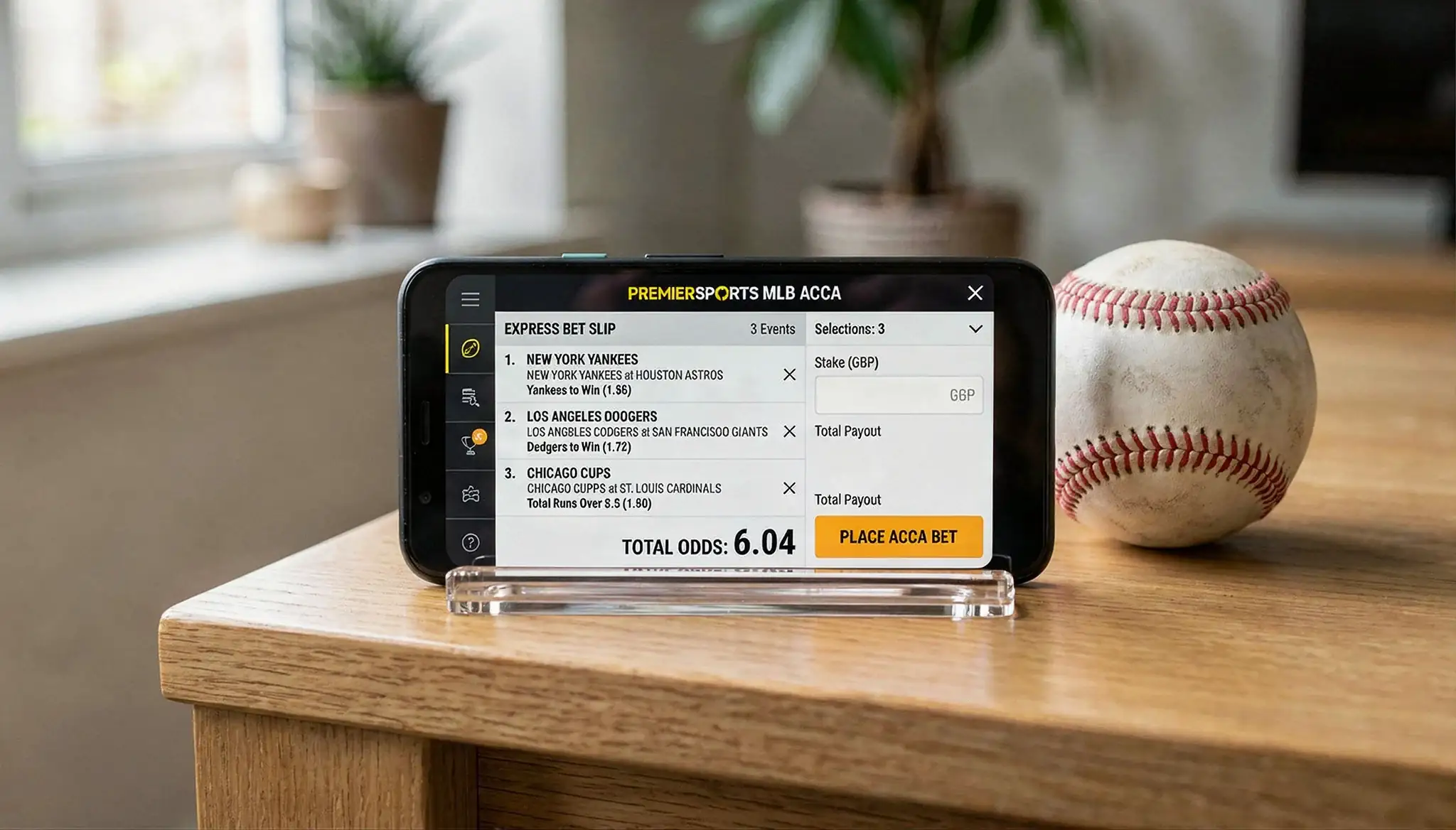
Only if the bet was placed under listed-pitcher terms. Listed-pitcher rules void the bet and refund the stake when either starter is scratched before first pitch. Action terms keep the bet live regardless of starter changes – the replacement pitcher’s quality becomes the new input but the original price stands. UK books vary in their default terms across markets: most moneyline and run-line bets default to listed-pitcher, while totals, futures, and props more often default to action. Check the bet-slip terms before placement.
Should I default to listed-pitcher or action wagers?
Listed-pitcher terms are the safer default for most positions. They void the bet on a scratch and return capital, which avoids the replacement-starter risk that the original price did not account for. Action terms are appropriate only when the betting thesis is independent of the specific starter – futures markets, bullpen-dominant total positions, and certain props. The action option occasionally offers a small price improvement, but the improvement rarely compensates for the variance the option introduces.
Prepared by the Betting on Baseball Tips editorial staff.