Responsible Gambling UK: Safer MLB Betting Framework
 Available in US
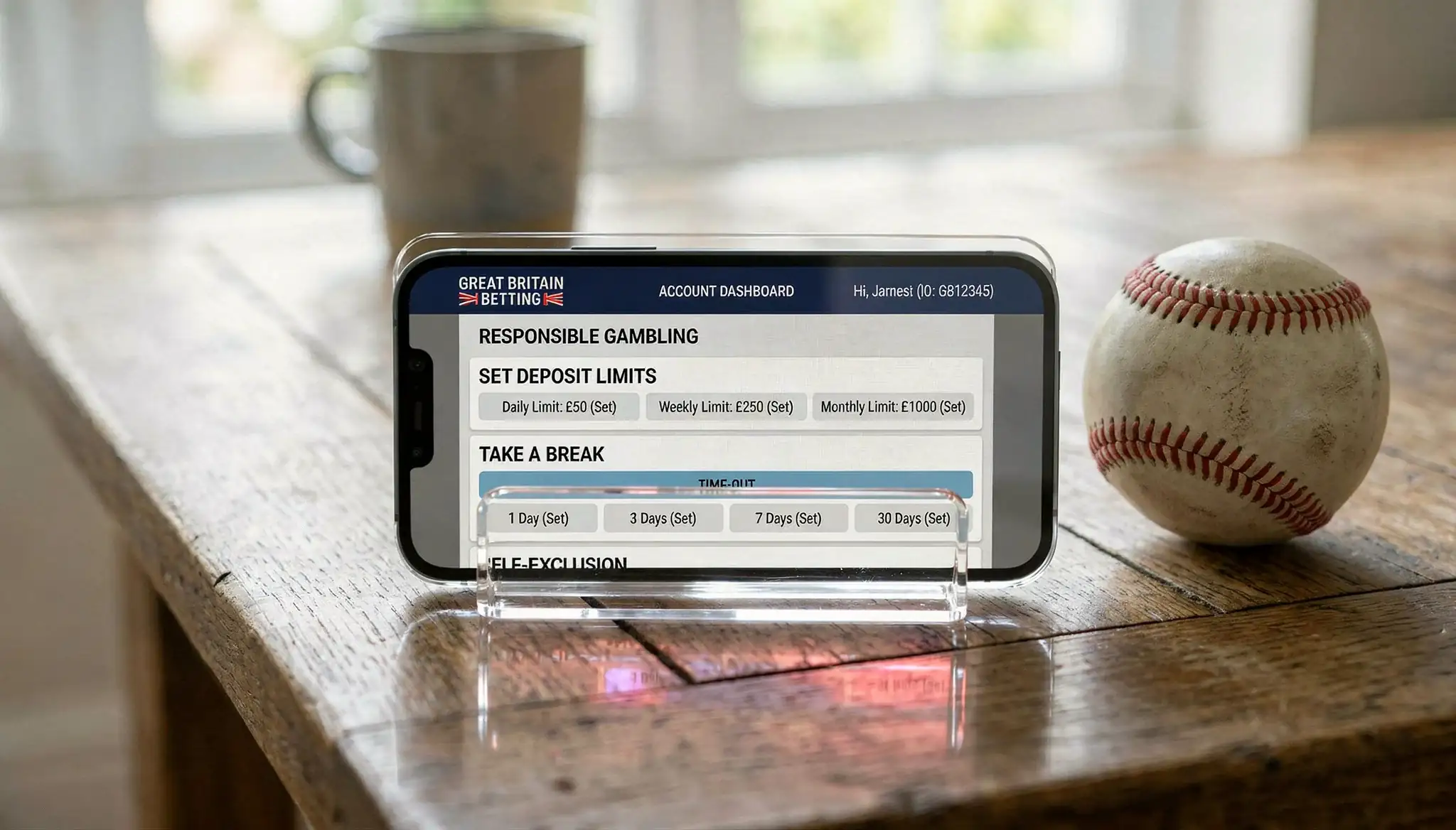
Table of Contents
- UK Safer Gambling Tools: Deposit Limits and Self-Exclusion
- Deposit Limits, Loss Limits and Time Caps
- GAMSTOP and Self-Exclusion
- The Statutory Levy and What It Funds
- The May 2025 Marketing Rule Changes
- The Black Market Risk
- Recognising the Warning Signs
- How a Disciplined Workflow Protects the Edge
- Common Questions on UK Responsible Gambling
UK Safer Gambling Tools: Deposit Limits and Self-Exclusion
The first time I had to use a deposit limit on my own account was during a four-day MLB road trip in 2020. I was up early in Eastern time, the games ran past midnight UK time, and I was placing live bets on bullpens I had not researched. I lost 14 percent of my bankroll in seventy-two hours. The fix was not better analysis. It was a £200 weekly deposit cap and a sixty-minute reality check. Both took ninety seconds to set.
Responsible gambling tools are not add-ons for a struggling bettor. They are the structural defaults that allow a disciplined process to survive the inevitable bad weeks. The UK regulatory framework in 2025 and 2026 has rebuilt the toolkit substantially, with statutory funding behind support services for the first time, mandatory granular consent for marketing, and harder caps on stakes and bonus mechanics. This guide covers what is available to a UK MLB punter, when to use which tool, and why the framework rewards the disciplined operator and the disciplined customer at the same time.
Deposit Limits, Loss Limits and Time Caps
Every UK-licensed sportsbook offers three core controls: deposit limits (daily, weekly, monthly), loss limits, and session time caps. These are not optional features the operator chooses to provide. They are conditions of holding a Gambling Commission licence, and the operator must surface them in account settings without friction. Any failure to honour a customer-set limit is a regulatory breach.
The new £5 per spin and £2 per spin (for ages 18 to 24) caps that came into force for online slots in 2025 do not apply to sports betting directly, but they signal the direction of travel. Stake discipline is being treated as a regulatory matter, not a personal-responsibility-only matter. For an MLB bettor that means deposit caps are the analogue of the slot-spin cap. They put a ceiling on how much capital can flow into the betting account in any given window, regardless of how the games are going.
My personal practice is to set a weekly deposit limit at roughly twice my expected weekly stake volume. That gives slack for unusual opportunities but prevents the spiral where a chase day turns into a chase week. Loss limits operate similarly but trigger on outcome rather than input. I prefer deposit limits because they are deterministic.
Time caps are the underused control. For an MLB bettor in the UK, the natural temptation is to stay up for the late West Coast game when the East Coast game has already settled. A four-hour session cap forces a conscious choice to either go to bed or override the warning. The friction is the point.
GAMSTOP and Self-Exclusion
GAMSTOP is the multi-operator self-exclusion service for UK-licensed online gambling. One registration covers every Gambling Commission-licensed operator. A bettor selects a period (six months, one year, or five years) and is blocked from creating accounts or logging into existing accounts at every licensed UK sportsbook, casino and bingo site for that duration. The block cannot be lifted early.
The strength of GAMSTOP is the multi-operator coverage. Single-operator self-exclusion was historically the easy workaround that allowed someone in difficulty to walk down the street, metaphorically, and open an account elsewhere. GAMSTOP closes that route across the entire licensed market. A bettor who has registered for GAMSTOP and then gambles online has either found an unlicensed operator (which carries its own significant risks, discussed below) or a relative’s account.
The friction of registering matters. I have recommended GAMSTOP to two acquaintances in the past three years. In both cases the process took less than ten minutes and produced the right outcome. Neither person needed an analytical conversation about edge or expected value. They needed the gambling activity to stop, and GAMSTOP stopped it.
Short-term cool-off periods are the lower-friction equivalent. Most UK operators offer a 24-hour, 7-day, or 30-day account suspension. These are useful when a single bad day or week needs a hard reset rather than a long-term commitment. The operator must honour the cool-off as instructed.
The Statutory Levy and What It Funds
From April 2025 the UK introduced a statutory gambling levy on operators, with a phased rate that reaches 1.1 percent of gross gambling yield by April 2027. The levy funds research, prevention and treatment of gambling harm, replacing the patchwork of voluntary contributions that previously supported organisations like GambleAware. The shift is structural. Treatment funding is now backed by law rather than goodwill.
For a UK MLB bettor, the practical implication is that NHS-commissioned gambling treatment services are scaling up substantially through 2026 and 2027. The National Gambling Treatment Service operates a 24-hour helpline (0808 8020 133) and provides free, confidential support including therapy. GamCare delivers structured counselling through phone, web chat and in-person sessions. Both are free at the point of access for UK residents.
Bonus offers and free bets are also under regulatory scrutiny. Industry analysis has noted that nine times more free-bet offers are issued during major tournaments compared with off-season periods, and the May 2025 marketing rule changes introduced granular consent requirements that limit when and how operators can push these promotions. The point was made explicit in House of Commons debate in December 2025, where the position was put on record that targeted digital marketing means a person with a gambling problem is nine times more likely to be offered a so-called free bet, according to Gambling Commission data. For an MLB bettor, the World Series and the post-season are the relevant tournament window. The bonus volume in October has historically been substantial, and the May 2025 rules now require that the recipient has actively consented to receive that specific category of marketing.
The May 2025 Marketing Rule Changes
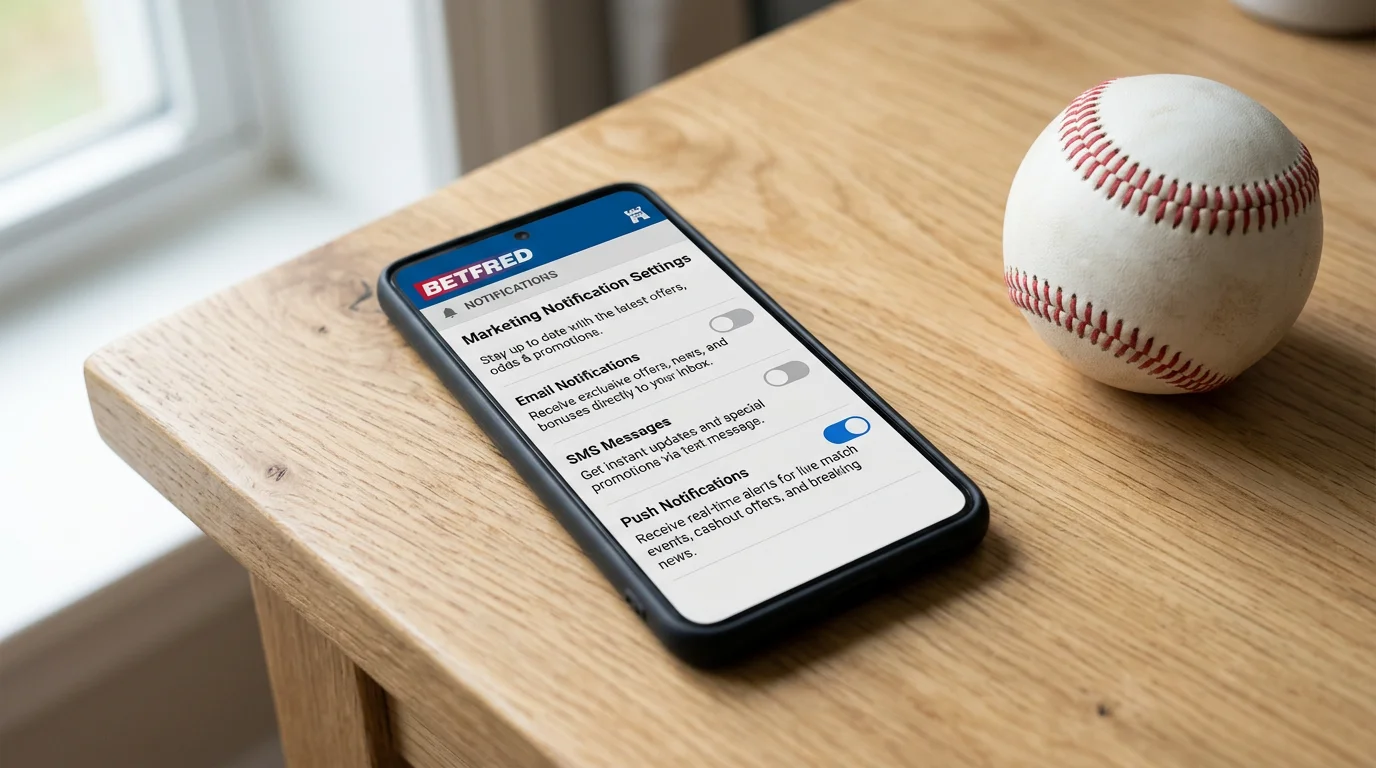
The May 2025 changes to UK direct marketing rules require operators to obtain granular, opt-in consent for each marketing channel and broadly each marketing category. A customer who consents to product update emails has not, by default, consented to free-bet promotional emails. A customer who consents to text messages has not consented to push notifications. The operator must obtain explicit consent for each combination.
For a bettor, that means the spam volume should be measurably lower from mid-2025 onwards. It also means the consent settings in your account are worth reviewing. Most operators present the consent options at registration and then bury them in account settings afterwards. A five-minute audit of marketing consent settings can reduce the volume of promotional pressure in your inbox to zero. The May 2025 marketing rules deserve a separate read for any bettor who wants to understand how the granular consent framework interacts with bonus mechanics.
The deeper point is that marketing volume is itself a risk factor. A bettor who receives twelve free-bet emails per week during the post-season is being nudged toward stake volume that does not match analytical edge. The bonus is not the bet. The bonus is the prompt. Removing the prompt is one of the cleanest ways to convert a marketing-driven bettor into a process-driven bettor.
The Black Market Risk
Unlicensed operators are the genuine risk that sits underneath every responsible gambling conversation. Gambling Commission analysis has estimated the UK black market at around £500 million in annual stakes, and the risk profile of those operators is fundamentally different. There is no GAMSTOP coverage. There are no enforced deposit limits. There is no statutory complaint mechanism if the operator declines to pay a winning bet. There is no responsible-gambling toolkit at all.
The marketing of unlicensed operators often emphasises better odds, larger bonuses, and unrestricted accounts. The better-odds claim is sometimes accurate at the margin (because there is no UK tax burden on the offshore book) but the structural risks dwarf any odds advantage. A UK-licensed sportsbook offering 1.92 on a Yankees moneyline is a meaningfully safer counterparty than an unlicensed offshore book offering 1.96.
Increases in the Remote Gaming Duty rate from 21 percent to 40 percent and the General Betting Duty from 15 percent to 25 percent (announced for 2026) will compress the licensed market’s margins further, and there is genuine concern that the tax burden could push more activity offshore. For a bettor, the right response is not to chase the cheaper offshore odds. It is to use the regulated UK market within deposit limits and accept that the regulatory protection is worth a margin point or two on the price.
Recognising the Warning Signs
The behavioural markers that distinguish disciplined betting from harmful betting are well-documented. Chasing losses is the headline indicator. Stake size escalating after a losing day, betting on games where the analytical work was not done, betting on markets outside the normal portfolio (a baseball bettor suddenly placing tennis bets at 1 AM), and time-on-screen extending well beyond planned sessions are all warning patterns.
The subtler markers are harder to catch in oneself but easier in others. Reduced sleep around event windows. Mood that tracks bet outcomes rather than life events. Avoidance of conversations about bankroll size or recent results. Reluctance to take a week off during the All-Star break or other natural pauses in the schedule. If a friend or partner notices any of these, that observation deserves more weight than the bettor’s own self-assessment, because the bettor’s self-assessment is itself compromised by the activity.
The clean intervention is structural rather than psychological. Set a deposit limit lower than the current level. Set a session time cap. Take a 30-day cool-off if needed. Use GAMSTOP if the cool-off is not enough. None of these requires a diagnosis or a difficult conversation. They are administrative actions that happen to also be effective.
How a Disciplined Workflow Protects the Edge
The reason responsible gambling tools belong in a betting article rather than in a separate health column is that they protect the analytical edge. A bettor with a deposit cap, a session time cap, and granular consent settings is structurally less likely to place a low-quality bet than a bettor without those tools. The edge of the analytical work survives only if it is applied selectively. Every random bet placed under fatigue or marketing pressure dilutes the average expected value of the portfolio toward zero or below.
I treat the responsible-gambling toolkit the same way I treat the line-shopping toolkit. Both are workflow infrastructure. Both add ninety seconds to a bet placement and remove categories of error that compound over a season. The customer who uses the tools is also the customer who keeps an analytical edge, and the regulatory framework as it stands in 2025 and 2026 makes that infrastructure easier to deploy than it has ever been.
Common Questions on UK Responsible Gambling
Two practical questions come up most often when I discuss the framework with UK MLB bettors.
How does the statutory gambling levy fund support services for UK bettors?
The statutory levy applies to UK-licensed operators based on a percentage of their gross gambling yield, scaling up to 1.1 percent by April 2027. Funds are directed to research, prevention and treatment of gambling harm via NHS-commissioned services and bodies like GambleAware. For an MLB bettor, the practical impact is expanded access to free counselling through the National Gambling Treatment Service helpline (0808 8020 133) and GamCare, with funding now backed by law rather than voluntary industry contributions.
Can I set MLB-specific deposit limits at a UK sportsbook?
Most UK operators set deposit limits at the account level rather than the sport level, so a single weekly cap applies across MLB, football, tennis and any other markets. A few operators offer product-level limits (separate caps for sports versus casino), but sport-by-sport caps within a single product are unusual. The workaround is to maintain disciplined unit sizing within the overall deposit cap and use session time controls during MLB-heavy windows like the post-season.
Written by the editors at Betting on Baseball Tips.