NRFI and YRFI MLB Betting: First-Inning Run Markets
 Available in US
NRFI Odds: Finding Value in First-Inning MLB Markets
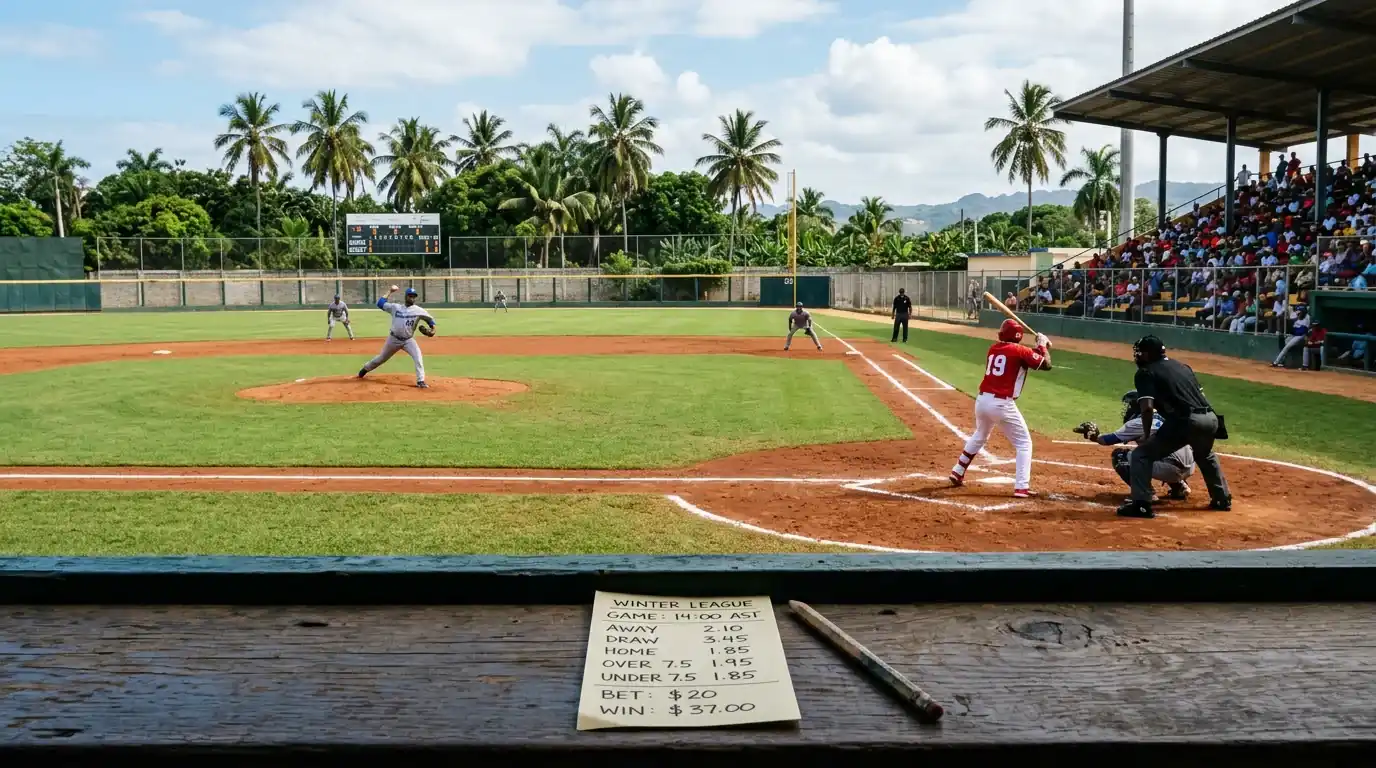
The first time I priced a NRFI properly was on a wet Tuesday in May, around half past midnight UK time, with a cup of tea going cold and a Cleveland starter warming up against a top-of-the-order I had run through three different filters. The price was 1.78. By first pitch it was 1.69. Nine minutes later, the inning was scoreless and the ticket cleared. That moment taught me something I had not appreciated about the seven years I had spent looking at full-game lines: the first inning is the part of the market where bookmakers have the least information and the punter has the most.
NRFI – No Run First Inning – and its mirror, YRFI, are first-inning props that settle within roughly nine minutes of first pitch. They sit in a corner of the slip most casual UK bettors ignore. That neglect is the edge. Around 30 % of MLB games end with a one-run margin, which tells you how thin scoring environments are league-wide; the opening inning is thinner still, because two of the best pitchers on the roster are facing two lineup spots that often include automatic outs. The market knows this in aggregate but rarely in specifics, and a punter willing to do the lineup-and-pitcher homework finds genuine decimal-odds value more often than on the run line.
How NRFI and YRFI Settle
A friend of mine, completely new to baseball, asked me last summer why anyone would bet on a single inning when the rest of the game was sitting right there. The honest answer is that the rest of the game is the problem. Nine innings carry weather, bullpen rotations, mid-game pinch hitters, and at least one ejection for the season. The first inning is a closed system: same starter, same nine batters, same umpire, same wind reading, and a settlement window narrow enough that you can pour a fresh tea and grade your own ticket before the second.
NRFI settles as a winner if zero runs cross the plate in the top and bottom of the first. YRFI wins if at least one run scores in either half. Both teams must bat for the wager to stand under most UK book rules, which matters when a home side is leading after the top of the first and the game is later abandoned – that situation can void the YRFI even if the bottom-half never happened. UK-licensed sportsbooks treat the prop as void on a postponement before first pitch, which is the standard approach across the regulated market.
Decimal odds usually sit in the 1.55-1.85 range for NRFI and 1.85-2.30 for YRFI on average matchups, with juice baked into both sides. The trick is reading where the line is actually mispriced, not where the favourite simply looks short. A 1.65 NRFI on a Cy Young-calibre starter facing a punchless bottom-of-the-order is not a value play – it’s the price of the obvious. A 1.78 NRFI on a starter the market is fading because of one bad outing in April, with the underlying numbers telling a different story, is where the work pays.
The Starter Profile That Drives a NRFI
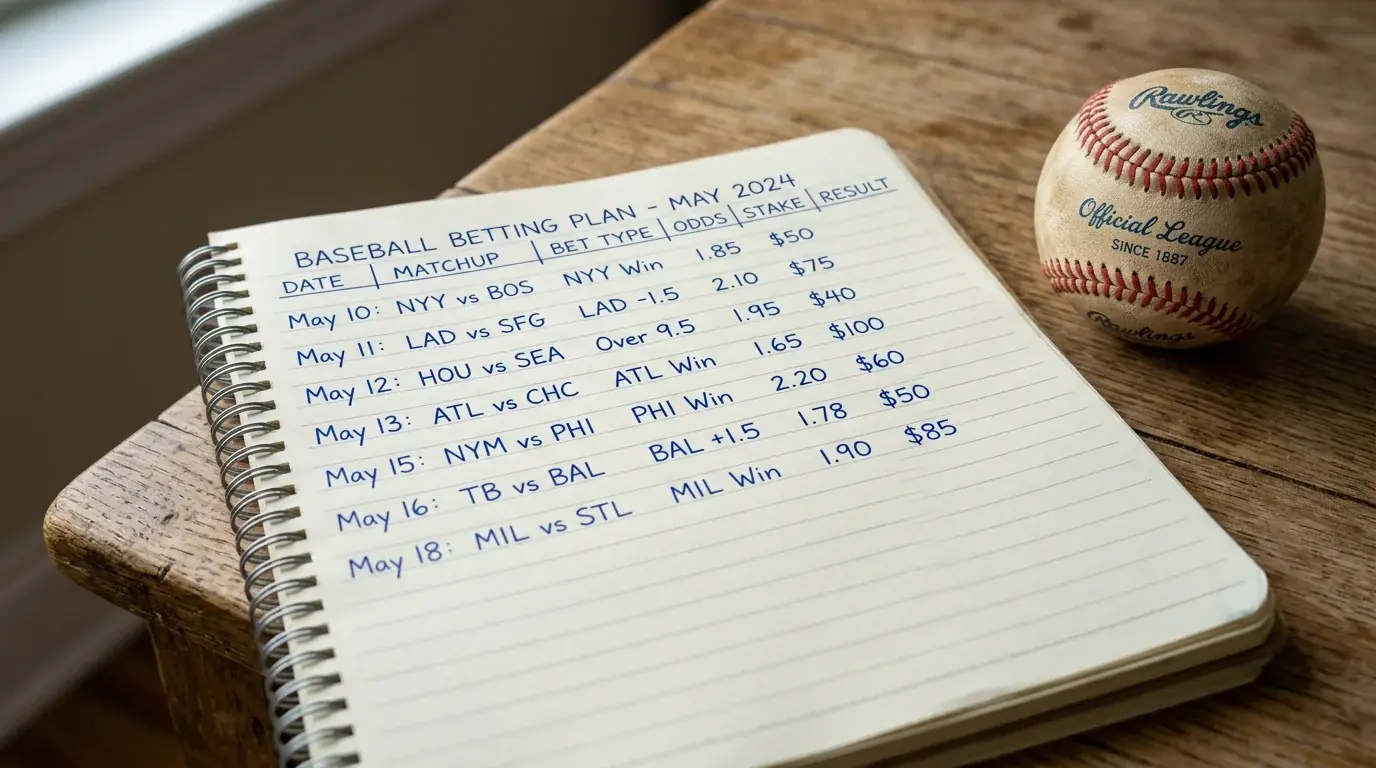
I keep a battered notebook with a simple two-column list: pitchers I will back at NRFI prices, pitchers I will fade at YRFI prices. The names rotate, but the criteria do not. If you build the same list, you stop reaching for first-pitch dart throws and start letting the schedule come to you. There are usually six to eight starting assignments per UK night that meet the threshold, and most nights I bet none of them – the prices simply are not there.
The two anchor stats are K% and BB%. League-average K% sits around 22.2 % and BB% around 8.4 %, so a starter at 28 % strikeouts and 6 % walks is collecting outs in the air without giving free passes, which is the cleanest path through a clean first. League-average LOB% – the rate at which runners on base are stranded – hovers near 72.3 %, and a starter who consistently strands above that mark is suppressing first-inning damage even when contact happens. Three baserunners in an inning, after all, is not a run; it’s a run only if the pitcher cracks under sequencing pressure, and that’s a measurable trait.
The second filter is what I call “first-inning footprint.” Every starter has a split between his first inning and innings two-through-six, and the gap matters. Some starters are notorious slow starters – they walk the leadoff, give up a soft single, and surrender a sacrifice fly before they settle. Others are the opposite, working through the top of the order with their fastest fastball and best slider, then fading later. NRFI is a bet only on the former or against the latter, depending on which side of the prop you take, and getting that distinction right is half the workshop. I cross-reference using a sabermetric workshop on starters when I want a deeper read on whether the surface numbers are real.
Pitch arsenal matters too. A four-pitch starter who can sequence a curveball off a fastball will retire a top-of-the-order more cleanly than a two-pitch reliever-type masquerading as a starter. The latter shows up against right-handed lineups by spamming sliders, and the third batter – a left-hander, usually – sees three of them in a row and lifts one to right. That lift is a YRFI hit, not a NRFI one.
The Top of the Order That Kills NRFI Tickets
One Sunday morning I lost three NRFI tickets in a row to leadoff hitters who walked, stole second, and scored on a single by the three-hole. Same pattern, three different teams. I went back through the previous month’s data and counted: when the leadoff hitter has a sub-22 % K rate and an above-average BB rate, the YRFI hit rate climbs by a meaningful margin even with an above-average starter on the mound. The lineup card is half the bet, and treating it as a footnote is the most common amateur mistake on this market.
The top three batting positions get more first-inning plate appearances than any other slot. They also tend to be the most patient, the most disciplined, and the most likely to extend an inning past the first out. A leadoff with a 12 % walk rate and gap power, a two-hole who hits to all fields, and a three-hole with extra-base juice will produce a YRFI more often than the league-wide rate suggests, even against a strong starter. When that lineup faces a starter with first-inning trouble – slow warm-up, command lapses early, a heavy reliance on one pitch – the YRFI price at 2.05 is closer to a fair coin flip than the market admits.
Conversely, lineups led by a free-swinger with a 30 % K rate, batting in front of two grinders who chase off the plate, are NRFI gold. The first three outs come quickly, the starter never reaches the four-five-six section where the power lives, and the inning ends 12 pitches in. Three outs on twelve pitches is your NRFI cashing.
One last lineup wrinkle: catchers and pitchers in the top three. Some teams, mainly NL holdovers in interleague situations, hide a weak bat at the top of a lefty-righty platoon. If the leadoff is a defence-first catcher with a sub-90 OPS+, the NRFI side gains a small but real boost. These small overlays compound across a season.
Worked Example: A NRFI Decision in Decimal Odds
Take a hypothetical Tuesday slate: a right-handed starter with a season K% of 27.4 and a BB% of 6.1, a first-inning ERA roughly half a run below his full-game number, facing a lineup whose top three combine for a 24 % strikeout rate and a slightly below-average on-base figure. Wind 6 mph crossways, mid-70s temperature, neutral park. The decimal price on NRFI opens at 1.72.
I work the implied probability: 1 ÷ 1.72 = 0.581, or 58.1 %. I then build my own probability. League-wide first-inning scoring rate sits near 28 %, meaning league-average NRFI hit rate is around 72 %. Adjusting downward for an average top-three of patience, then upward for an above-average starter and a slightly better-than-average BB profile, I land in the 70-73 % range. That is meaningful daylight over the implied 58.1 %, which suggests the price is genuinely value rather than apparent value. A £20 stake at 1.72 returns £34.40, of which £14.40 is profit. Across thirty similar decisions in a season – the realistic frequency for a UK bettor watching one game per night – the maths supports a positive expected value if the model is honest.
Two cautions. First, I never stake more than 1 unit on a NRFI, even at a strong price, because variance on a nine-minute settlement window is brutal – three losses in a row feels like a bad month, even when the model is right. Second, I never bet a NRFI without seeing the confirmed lineup card. Late scratches and surprise rest days flip the underlying probabilities by enough to matter, and a 1.72 price quoted at 22:00 UK time, eighty minutes before first pitch, may not survive a 23:30 lineup release.
NRFI / YRFI Questions UK Bettors Ask
The two questions that come up most often when readers email me about this market sit at slightly different ends. One is mechanical – what the market literally means and how it grades. The other is procedural – what happens when weather throws a spanner into the settlement window. Both deserve straight answers rather than evasions, because anyone considering a first-inning prop at a UK book should know what they’re holding before first pitch.
What does NRFI mean in MLB betting?
NRFI stands for No Run First Inning. The bet wins if neither team scores during the top or bottom of the first inning. YRFI is the inverse – it wins if at least one run is scored before the first inning ends. Both sides must bat for the wager to stand under standard UK-licensed sportsbook rules.
Are NRFI bets graded if the first inning is interrupted by rain?
If first pitch is thrown but the game is suspended before both teams complete the first inning, most UK books void the wager and refund the stake. If the first inning is fully completed before any rain delay, the bet settles on the actual first-inning result regardless of what happens later. Specific rules vary by operator, so check the baseball settlement section of any UK-licensed sportsbook before staking.
Written by the editors at Betting on Baseball Tips.