MLB Lineup Card Betting: Pre-Match Market Adjustments
 Available in US
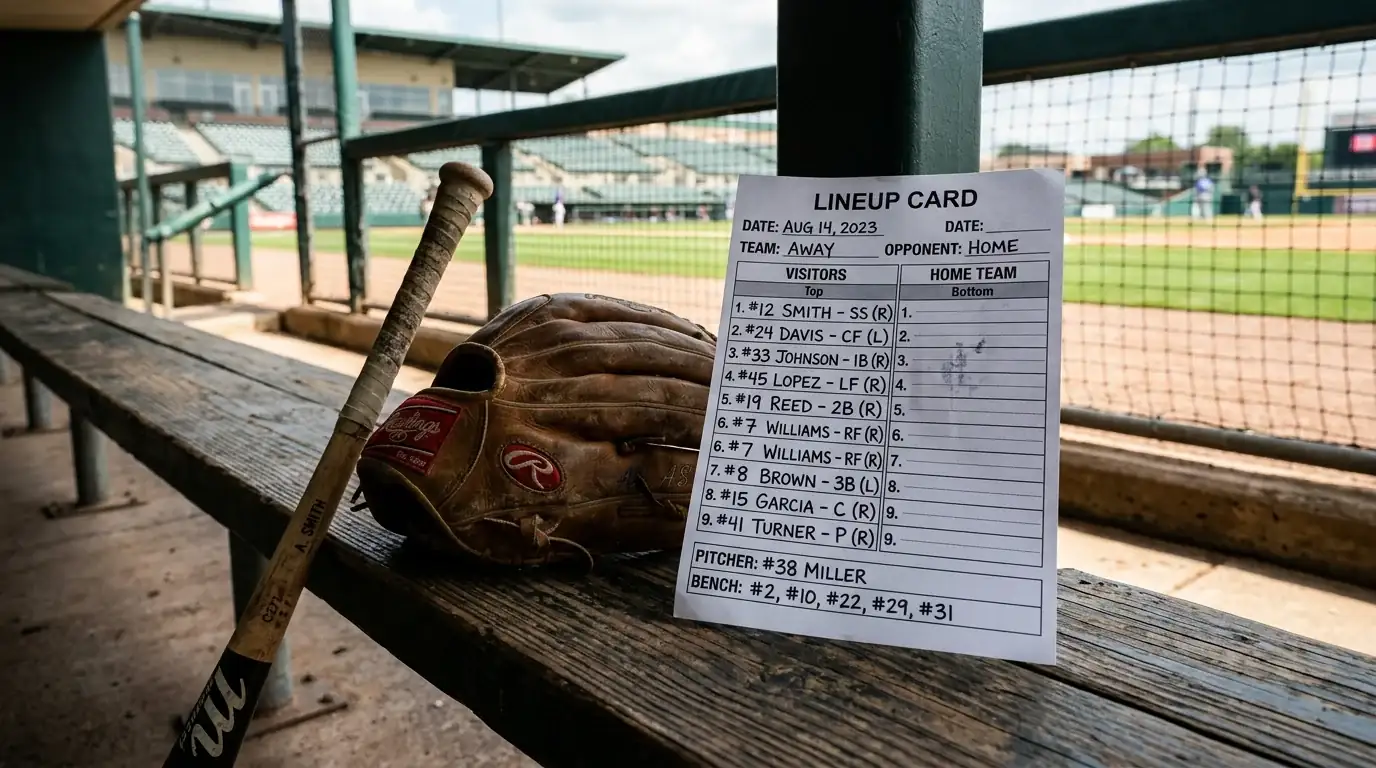
Table of Contents
MLB Lineup Optimisation: Reacting to Platoon Splits
For the first three years I bet on MLB I rarely waited for the lineup card. I would do my analysis in the late afternoon UK time, place my bets around the time the markets opened, and rely on the projected lineups to be roughly accurate. The win rate was acceptable but not exceptional. Around 2019 I started waiting for the official lineup release before placing player props, and the win rate on those bets ticked up several percentage points within a season. The lesson was simple: the projected lineup is sometimes wrong, and the first half-hour after the official release is often the only window where the betting market has not yet fully digested the actual lineup. The hit-prop workshop covers how lineup-card timing interacts specifically with hit-prop pricing, but the general workflow point is the same across every prop market on a player-by-player basis.
This guide walks through when MLB teams release official lineups, why rest days and platoon splits matter for prop bets, how UK bettors can integrate lineup card reading into a workflow constrained by US time zones, and the worked example of how a single batting-order surprise can change a bet’s expected value.
The Release Timing
MLB teams publish official starting lineups typically two to four hours before first pitch. The exact timing varies by team and by manager – some clubs release earlier, some closer to game time. The 7:05 PM Eastern start (around midnight UK time) means lineup releases generally happen between 8 PM UK and 11 PM UK, which is convenient for the UK bettor who is awake during evening hours and wants to bet after lineup confirmation rather than before.
The 2:36 pre-pitch-clock per-pitch pace and 2:40 post-pitch-clock pace mean the game itself unfolds quickly once it starts, but the pre-game window is unchanged. The betting market has time to digest the lineup release, but the digestion is not instant. The first thirty minutes after lineup release frequently contains pricing inefficiencies on prop markets – particularly on lower-profile starters and on platoon-driven prop bets where the lineup confirms or contradicts the pre-release projection.
For a UK bettor, the practical workflow is to do the analytical work in the late afternoon UK time (assessing the matchup, identifying potential prop targets, listing the projected lineup), then check the official lineup release in the evening UK hours, then place prop bets in the immediate window after the release. That sequence captures the analytical preparation while preserving optionality on the actual lineup. The full process takes around thirty minutes per game, distributed across the pre-game window.
Rest Days and Their Impact
The 162-game regular season requires every position player to take rest days, and rest-day patterns vary by player and by manager. Veterans typically take more rest than younger players. Catchers take more than infielders. Players returning from minor injuries take strategic rest to manage workload. The lineup card release is the bettor’s confirmation of who is playing today and who is resting, and the difference matters for prop bets in proportion to the player’s normal contribution.
For a Yankees prop on Aaron Judge’s home-run market, his presence in the lineup is almost decisive – his home-run prop would not be priced in his absence, and the operator pulls the market if he is rested. For a team-total prop, the absence of a top hitter shifts the projected runs scored downward by roughly 0.3 to 0.5 runs depending on the depth of the bench replacement. For a moneyline bet, the same absence has a smaller but non-trivial effect, typically moving the implied probability by 1 to 3 percentage points depending on the player and the matchup.
The rest-day timing is partly predictable and partly not. Teams typically rest position players in day games following night games, in the second game of doubleheaders, and in the final game before a long road trip. A pre-release projection that does not account for those patterns can be wrong on a meaningful percentage of game days. The lineup card release is the moment of confirmation.
Platoon Splits and Batting Order
The most analytically rich part of lineup card reading is the platoon-split confirmation. Many MLB teams use right-handed and left-handed batter platoons at certain lineup positions, with the manager choosing the starter based on the opposing starter’s handedness. The lineup card confirms which player is starting today, and the choice frequently shifts the prop-market pricing for that player and for the team.
A right-handed-batter prop facing a right-handed starter prices differently from the same prop facing a left-handed starter. Hit props, home-run props and total bases props all have substantial platoon splits across the player population, with the typical right-handed batter facing right-handed pitching at meaningfully reduced batting average and slugging compared to the same batter facing left-handed pitching. The wOBA framework captures the impact: a single 0.882, double 1.252, home run 2.037, walk 0.691, with the platoon split adjusting each component’s expected frequency.
The batting-order position matters for runs-and-RBI props. The leadoff hitter typically gets one more plate appearance per game than the number-nine hitter, on average across a season. The cleanup spot maximises RBI opportunities. The number-two slot in modern MLB lineups is increasingly the highest-quality bat (analytically optimised lineups place the best hitter second rather than fourth). A lineup card that places a specific player in an unexpected batting-order spot – moving a typical leadoff hitter to the seven-hole because of recent slumping, for example – can shift that player’s expected plate appearances and RBI opportunities meaningfully.
The First Thirty Minutes After Release
The thirty-minute window after the lineup card releases is where the meaningful pricing inefficiencies typically exist. Operator pricing models update with the lineup data, but the update is not instantaneous on every market and the operator’s model may not reflect the same analytical priorities the bettor has used. A platoon split that the operator’s model treats as a small adjustment may be a larger factor in the bettor’s own assessment, and the operator’s price in the first thirty minutes can therefore offer real edge.
The window narrows as the betting market reacts to the lineup. By forty-five minutes after release, large operators have typically moved their prices to reflect the lineup, and the easier inefficiencies have been priced out. The first thirty minutes is the practical window for capturing lineup-driven edge, and a UK bettor who is awake and ready to place bets immediately after the typical 8 PM to 11 PM UK release time is structurally well-placed to capture that edge.
For a UK bettor whose schedule does not allow real-time lineup card reading every night (most bettors), the alternative is to focus the lineup-driven workflow on the games where the analytical preparation has identified the highest-edge prop opportunities. Picking three games per night for full lineup-card workflow is a sustainable routine that captures the highest-leverage opportunities without requiring presence at the screen for every game across the slate.
Worked Example: A Hit Prop With a Lineup Surprise
Suppose the projected lineup for tonight’s Astros-Red Sox game has Alex Bregman (right-handed batter) starting at third base for the Astros and batting fifth. The operator opens an over 1.5 hits prop on Bregman at decimal odds of 2.20. The pre-release projection assumes a standard matchup against the Red Sox right-handed starter.
The lineup card releases at 9:45 PM UK time. Bregman is starting but has been moved to the leadoff position rather than batting fifth. The change reflects a managerial decision around recent matchup performance. The leadoff position provides one additional plate appearance per game on average, which materially shifts the expected hit total. Bregman’s BABIP profile and recent contact-rate data give him a per-PA hit probability around 0.275, with the additional plate appearance worth approximately 0.275 x 1 = 0.275 expected hits.
The operator’s price update may not yet have fully reflected the batting-order change. At 9:50 PM UK time the over 1.5 hits prop is still available at decimal odds of 2.20 (implied probability 45.45 percent), while the bettor’s assessed probability of Bregman recording two or more hits in the leadoff role is now around 50 percent. The implied edge is 4.55 percentage points, and a £15 stake produces an expected value of approximately £0.68.
By 10:30 PM UK time the price has moved to 2.05 decimal odds (implied probability 48.78 percent). The bettor placed the bet at 2.20 in the post-release window and captured the structural edge before the market caught up. That is what the thirty-minute window looks like in practice.
The Discipline of Patience
The temptation when the lineup release runs late or the lineup is unsurprising is to abandon the lineup-card workflow and place the bet earlier on the projected lineup. The discipline is to wait. Most lineup releases happen within the typical window. The occasional late release is annoying but not common. The cost of the wait – placing the bet thirty minutes later – is small compared with the cost of placing on a wrong projected lineup.
I keep a simple log entry for each prop bet: time of placement, time of lineup release, whether the lineup matched the projection. After several years the data is clear. Bets placed before the lineup release have a measurably worse hit rate than bets placed in the thirty-minute post-release window, even when the lineup matches the projection in 80 percent of cases. The 20 percent of unmatched cases produce enough variance to swing the cumulative result. Patience pays.
The 22.2 percent league-average strikeout rate, 8.4 percent walk rate, and 72.3 percent left-on-base rate provide the baseline numbers for prop-bet calibration, but the lineup card is what makes those baselines applicable to a specific bet. The framework and the lineup card work together. Skipping the lineup card means the framework is being applied to incomplete information.
Common Questions on Lineup Cards and UK Betting
Two questions come up most often when I discuss lineup-card timing with UK MLB bettors.
How early can a UK bettor see the official MLB lineup before first pitch?
Most teams release official starting lineups two to four hours before first pitch. For a typical 7:05 PM Eastern start (around midnight UK time), that means lineup releases generally appear between 8 PM and 11 PM UK time. The exact timing varies by team and by manager – some clubs release closer to game time, others earlier. MLB.com, the team’s official Twitter/X account, and most baseball-focused news sources publish the lineups within minutes of release, so a UK bettor with a notification setup can see the lineup as soon as it is public.
Should I delay every prop bet until the lineup card is confirmed?
Yes for player-specific props (hit props, strikeout props, home-run props, total bases props) where the player’s presence and batting-order position materially affect the expected outcome. The thirty-minute window after lineup release typically contains the cleanest pricing inefficiencies, and the cost of waiting is small. For game-level moneylines and run lines, the lineup card matters less unless a major player is unexpectedly out, and pre-release placement is more defensible. For team totals, the lineup card matters at the margin and waiting is usually worthwhile if the schedule allows it.
Written by the editors at Betting on Baseball Tips.