UK Gambling Marketing Rules: MLB Bonus Offers Explained
 Available in US
UK Sportsbook Marketing: Tracking MLB Bonus Promotions
I noticed it before I read the regulation. In the last week of April 2025 my inbox was averaging eleven sportsbook promotional emails per week, almost all of them tied to MLB Opening Day, the NBA play-in, and the Premier League run-in. By the second week of May the count had dropped to three. The volume kept falling through the summer. By the time the post-season rolled around in October my promotional traffic was running about a quarter of what it had been twelve months earlier, even though my account activity had not changed.
What had changed was the consent framework. The May 2025 update to the UK direct marketing rules required granular, opt-in consent for each marketing channel and broadly each marketing category. The default consent that had quietly opened the floodgates for a decade was no longer enforceable, and operators had to either re-prompt for explicit permission or drop their existing recipient lists into a much narrower bucket. For a UK MLB bettor, the practical effect was a quieter inbox and a measurable change in how bonuses were offered. This guide walks through the framework, why it matters for MLB betting decisions specifically, and what to expect through 2026.
Granular Consent: What the Rule Actually Says
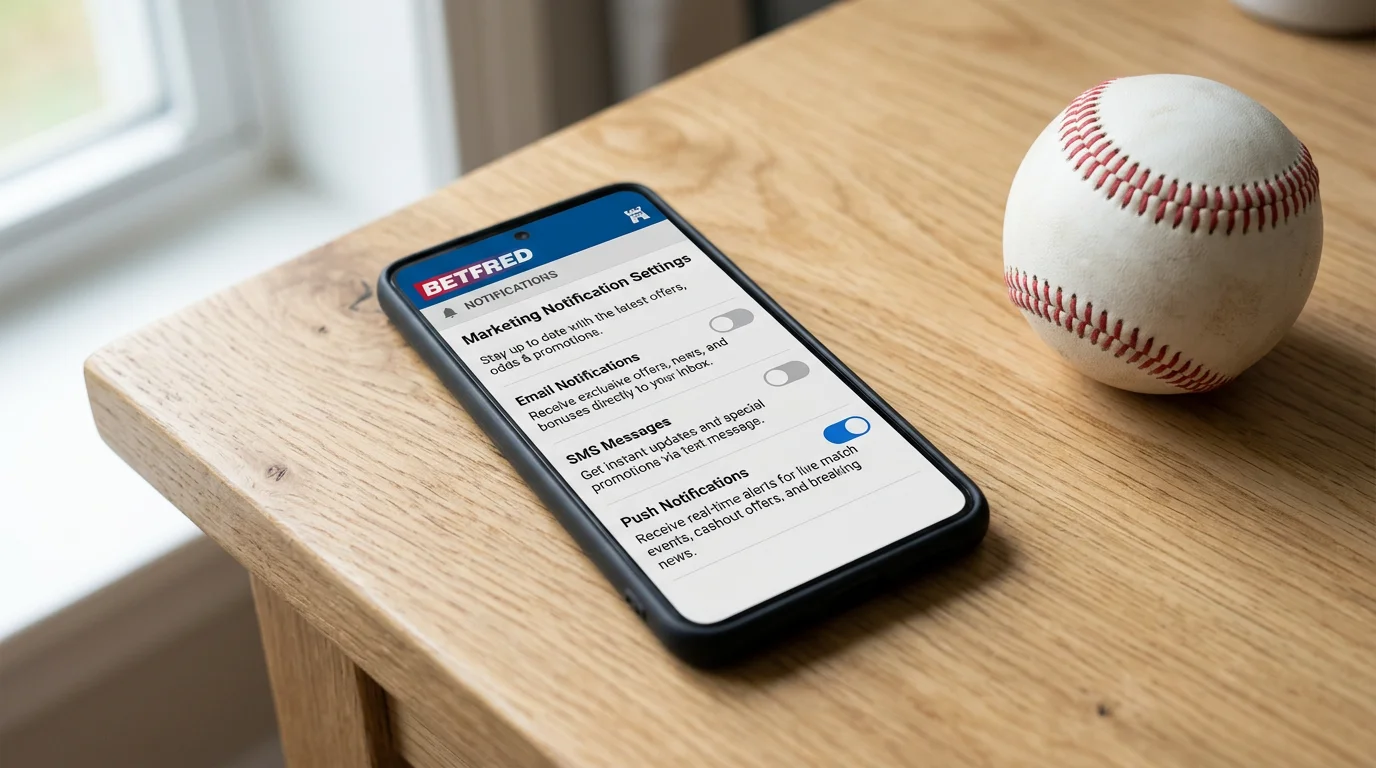
The principle is straightforward. A customer who consented to receive marketing from an operator did not, under the May 2025 rules, automatically consent to every category and channel that operator might use. Consent had to be granular, meaning the customer chose: email yes or no, SMS yes or no, push notifications yes or no, post yes or no, and broadly product-update content versus promotional-offer content. The operator had to record the consent decision per channel and per category, and could not bundle them into a single tick-box at registration.
For operators, the rule forced a substantial change in how registration flows were built. Most UK-licensed sportsbooks redesigned their sign-up funnels in the first half of 2025 to present the consent options clearly. The result is that a 2025 or 2026 sign-up at a UK book typically presents a panel of toggles rather than a single “send me marketing” tick-box. The customer who declines email promotions but allows email product updates will continue to receive transactional and informational messages but not free-bet pushes.
The 300 percent rise in criminal cases relating to gambling in recent reporting periods has fed into the regulatory push for tighter marketing controls, although the marketing changes are mainly about consent rather than enforcement. Industry voices have noted the lobbying texture around the broader package. David McLeish, partner at Wiggin LLP, observed in a 2026 trade-press interview: “The industry’s lobbying effort felt much more coordinated and consistent than in previous cycles, but at times the policy’s rationale appeared muddled.” That description applies as readily to the marketing-rule consultation as to the duty package, because both arrived in the same 2025 to 2026 reform cycle.
What Bonus Offers Look Like Now
The bonus mechanics that operators offer are not directly restricted by the May 2025 rules, but the way bonuses can be marketed is. A new free-bet promotion can still launch for the start of the MLB regular season; what has changed is who receives the email about it and how many times the customer can be re-prompted within a marketing window. Without granular consent on the file, the operator simply cannot send the email.
The downstream effect is that bonus volume has compressed at the recipient level even where the operator’s bonus budget has not. A bettor who has actively opted into promotional emails on baseball-related markets will still receive the major-event offers (Opening Day, the All-Star break, the post-season). A bettor who has not opted in will not. The implication is that the bonus environment is now much more dependent on what the bettor has chosen to receive, and a five-minute audit of marketing consent settings has become a lever the bettor controls rather than a state of nature.
Industry analysis has noted that nine times more free-bet offers are issued during major tournaments compared with off-season periods, raising concerns about cumulative pressure on customers already showing risk indicators. The May 2025 rules are partly an attempt to ensure that nine-times multiplier only reaches customers who have explicitly chosen to be in the promotional pipeline. The pattern was made explicit in House of Commons debate in December 2025, where the point was raised that targeted digital marketing means a customer with a gambling problem is nine times more likely to be offered a so-called free bet according to Gambling Commission data – a structural pressure that the consent framework is designed to filter at the customer level.
The May 2025 rules sit alongside the broader 2025-2027 reform package that includes the £5 per spin and £2 per spin caps for online slots, the statutory levy on operator GGY scaling to 1.1 percent by April 2027, and the Remote Gaming Duty rise from 21 percent to 40 percent and General Betting Duty rise from 15 percent to 25 percent announced for 2026. Marketing reform is one strand of a multi-strand programme. The full responsible gambling toolkit is the companion piece for any UK MLB bettor who wants to understand how the consent framework interacts with deposit caps, GAMSTOP and the support-service infrastructure.
Enforcement and Operator Behaviour
The Gambling Commission has historically used a mixture of regulatory settlements, financial penalties and licence reviews to enforce marketing rules. The May 2025 framework adds clearer triggers because consent records are auditable. An operator that sent promotional emails to a customer without granular consent on file is in clear breach, and the breach is documentable rather than disputable. The shift from interpretive enforcement to evidential enforcement is a meaningful change.
The Industry Group for Responsible Gambling and similar trade bodies have positioned operators to comply rather than litigate. The lobbying focus through 2025 and 2026 has been on the duty rises rather than the marketing rules, in part because the marketing rules are a clear regulatory intent that the industry has accepted in principle. The duty package has consumed the louder share of trade-press attention in 2026, while the marketing rules have settled into the new operating environment that operators have largely adapted to. The compliance investment in 2025 was substantial across the major UK books, and the visible result for customers is the quieter inbox and more transparent consent screens.
The auditing posture from the Gambling Commission has also been firmer. Spot checks of consent records, reviews of customer complaint patterns, and analysis of operator marketing data flows are standard parts of supervisory engagement now. An operator that cannot produce the consent record for a marketed customer faces a direct regulatory risk, not a softly-worded letter.
What This Changes for the Bettor
Three practical things change for a UK MLB bettor under the post-May 2025 framework. First, the inbox volume is much lower by default. Second, the consent settings are accessible and worth auditing because they actually control what arrives. Third, the bonus environment that does reach the bettor is more reliable in the sense that the offers come through legitimate channels with auditable consent rather than through aggressive lifecycle marketing flows.
The deeper change is that promotional pressure as a behavioural trigger has been substantially reduced. A bettor who relied on free-bet emails to time stake size around major events now has to seek the offers actively rather than receive them passively. That is a useful inversion. A bonus that the bettor has gone looking for is more likely to be assessed on its actual mechanics (rollover requirements, market restrictions, expiry) than a bonus that arrives at the top of an inbox during a fatigue window.
I have changed my own workflow accordingly. Once a quarter I check the promotional pages of the three or four UK-licensed sportsbooks I maintain accounts with. I assess the offers on their mechanics and ignore the lifecycle marketing entirely. The May 2025 framework supports that workflow rather than fighting it. Consent settings on each account are set to product updates only, with promotional content disabled. The structure means the offers I do consider are the ones I went looking for, not the ones that arrived at 11 PM on a Thursday.
Worked Example: An Opening Day Free-Bet Offer
Suppose an operator offers a “Bet £20 on the Yankees-Astros Opening Day match, get a £10 free bet” promotion. Pre-May 2025, that offer might have arrived in the inbox of any customer who had not actively unsubscribed. Post-May 2025, it arrives only to customers who have opted into promotional email marketing for sports betting.
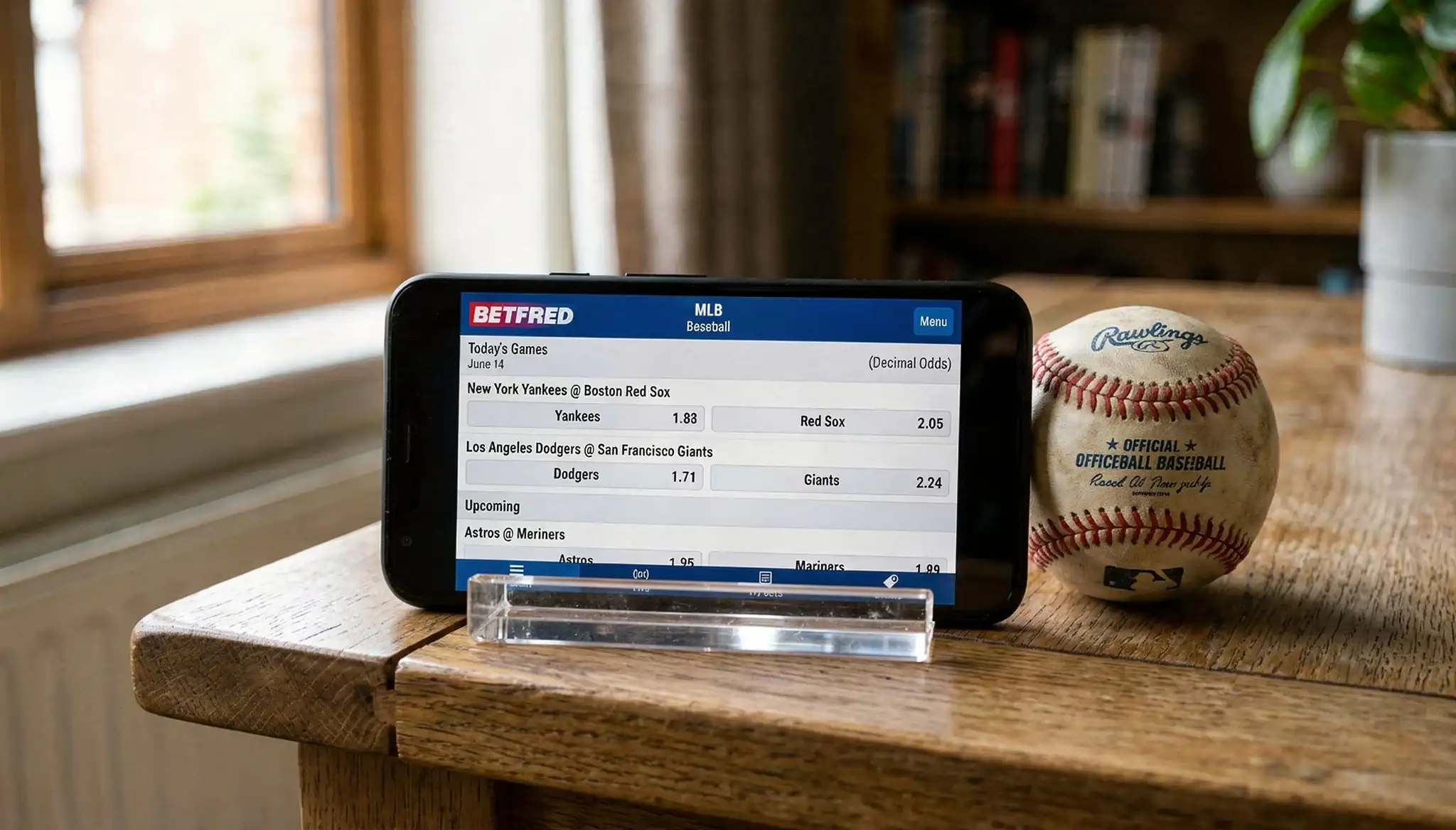
The mechanics need a separate evaluation. A £10 free bet typically pays out winnings only (not the stake), so a £10 free bet placed at decimal odds of 2.00 returns £10 in winnings. A £20 qualifying bet at decimal odds of 1.91 (a typical Yankees moneyline price) implies probability of 52.4 percent and pays £18.20 in profit if it wins. The free-bet adds £10 of expected upside if used at fair-odds markets. Combining the two, the offer has positive expected value if the qualifying bet is one the bettor would have placed anyway and the free bet is deployed at decimal odds of 2.00 or higher on a market with reasonable analytical justification.
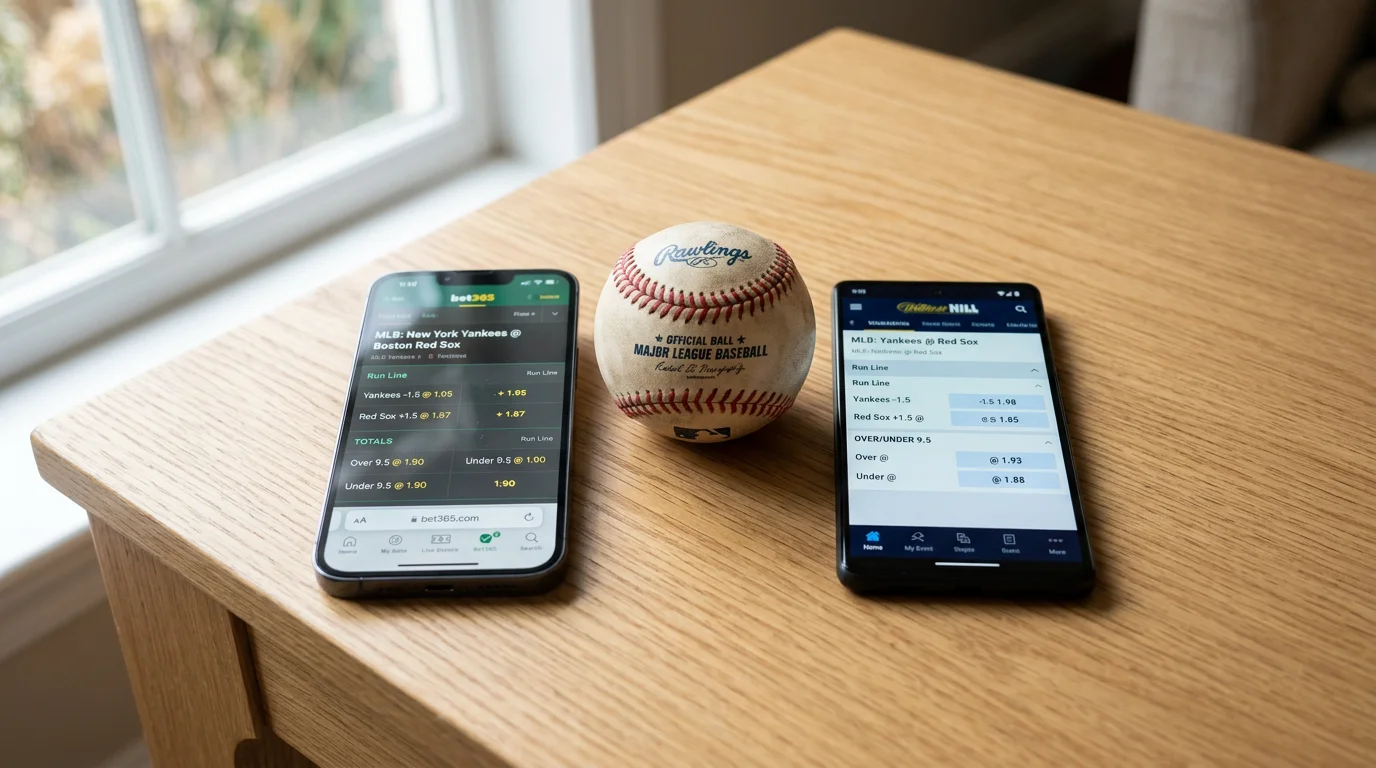
The regulatory point is that the offer reaches only consenting customers. The analytical point is that the consenting customer can still evaluate the offer on its merits, place the qualifying bet at line-shopped odds, and deploy the free bet on a position with genuine edge. The consent framework removes the lifecycle pressure without removing the legitimate promotional opportunity.
Common Questions on UK Marketing Rules
Two questions come up most often when I discuss the May 2025 changes with UK MLB bettors who have noticed the inbox shift.
Can a UK sportsbook still send free-bet emails for MLB markets?
Yes, but only to customers who have given explicit, granular consent to receive promotional email marketing for sports betting. The May 2025 rules require operators to record consent per channel (email, SMS, push, post) and broadly per category (transactional, product update, promotional offer). A customer who has consented to product update emails but declined promotional offers will not receive free-bet emails. The operator must produce the consent record on regulatory audit, so the system is structurally enforceable rather than reliant on customer complaint.
Are ‘risk-free first bet’ MLB promotions still legal in 2026?
Yes, the bonus mechanics themselves are not restricted by the marketing rules. What has changed is who can be marketed to about them. A risk-free first bet promotion that pays a stake refund as a free bet if the qualifying bet loses is permitted, subject to the standard requirements around clear terms (rollover, expiry, market restrictions) and only being promoted to customers with relevant consent on file. The 2026 RGD and GBD duty rises may compress operator margins enough that promotional generosity is reduced, but that is a tax-driven shift rather than a marketing-rule shift.
Prepared by the Betting on Baseball Tips editorial staff.