KBO Betting Tips UK: Korean Baseball Markets
 Available in US
KBO Betting Markets: Run Environments and Morning Odds
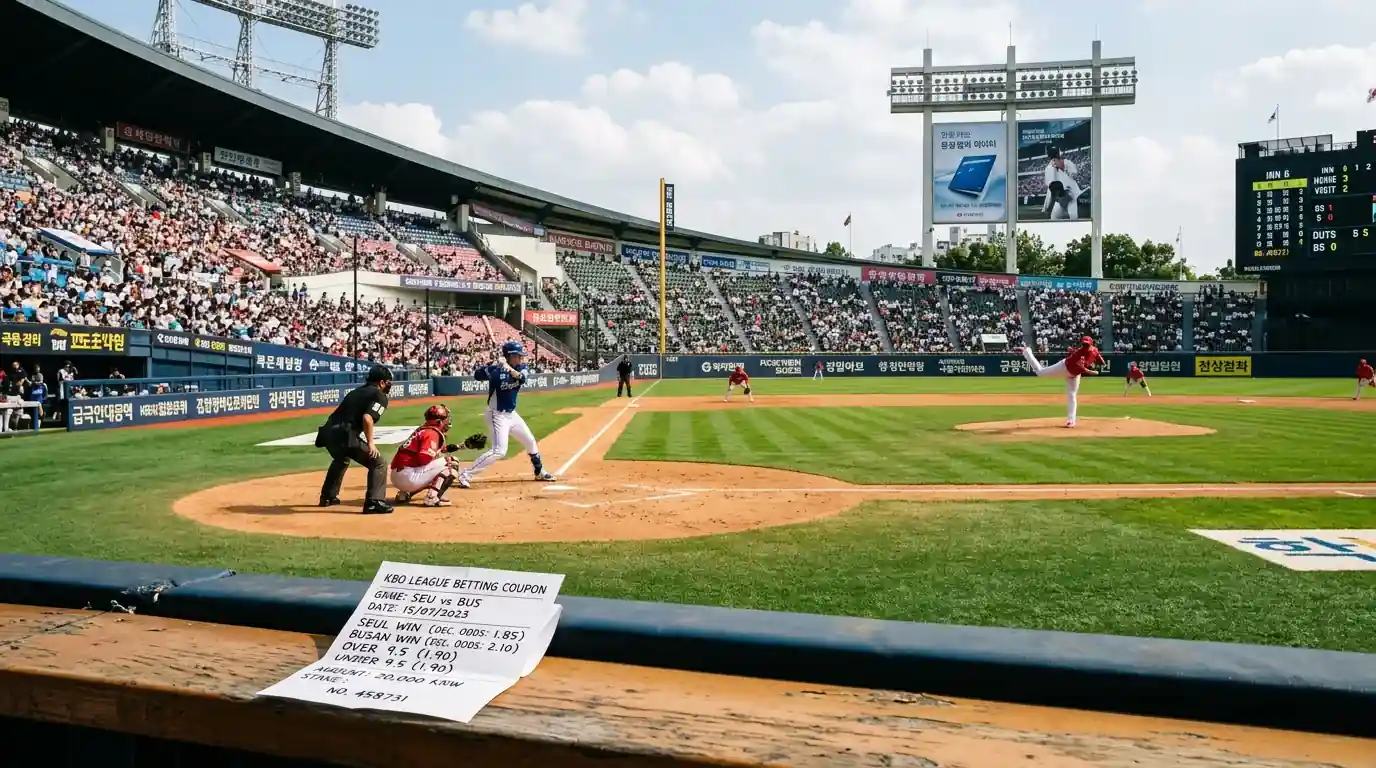
I started taking KBO seriously the same week I bought a coffee machine for the office. Both decisions were about my mornings. Korean baseball plays roughly ten hours ahead of British time, which means the typical first pitch lands at 09:30 to 10:30 BST – exactly the period between the school run and the first proper meeting of the day. By the time the first innings have unfolded, I have read line cards, checked weather, sized two bets, and gone back to whatever else the morning required. The schedule fits a working life in a way MLB simply cannot.
For UK bettors, KBO is the antidote to chasing 02:00 BST first pitches and the corresponding Wednesday hangovers. It is also a different baseball entirely – different run environment, different stadium dimensions, different starting-pitcher culture, different bullpen philosophy. The market understands this in aggregate but rarely in specifics. Betting interest in baseball among UK sports fans has climbed from 4 % to 5.9 %, and MLB Europe’s social following has tripled past 452,000, but most of that interest still attaches to MLB rather than KBO. The neglect of the smaller market is, again, the gift.
KBO League Structure and Pace
The Korea Baseball Organization is a ten-team league running from late March through early November, with a 144-game regular season per team rather than MLB’s 162. The smaller schedule produces tighter standings – a single ten-game stretch reshapes a team’s playoff outlook in a way MLB’s 162 mostly absorbs. For a UK bettor, the practical effect is that current form matters more in KBO than in MLB. Recent results carry more weight in the standings, and the betting market is correspondingly more sensitive to form.
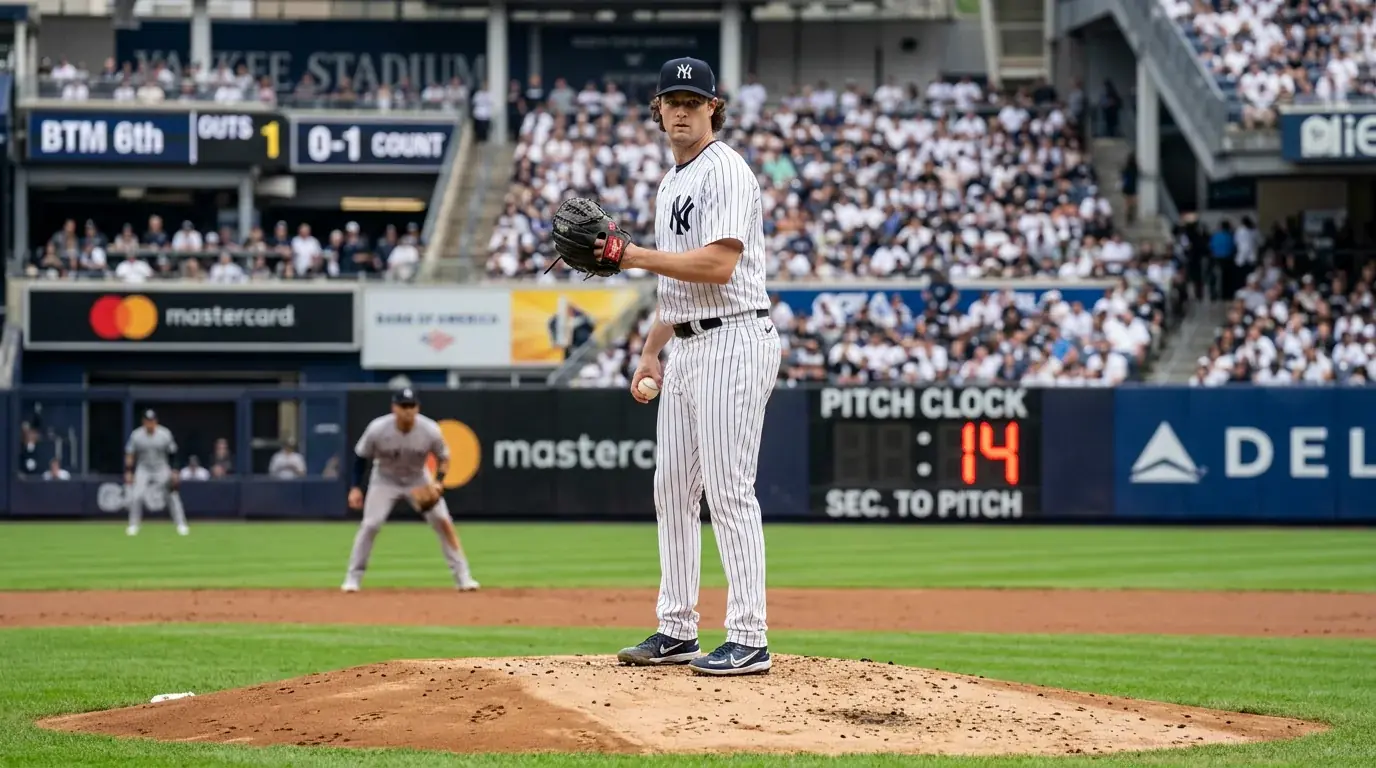
Game pace runs slightly slower than MLB. A typical KBO game runs 3 hours 10 to 3 hours 25 minutes, partly because the league has not adopted the same pitch-clock framework MLB rolled out. Pitchers take longer between deliveries, batters step out more frequently, and offensive innings linger. The slower pace matters for live betting more than for pre-match staking – there is more time to react to a swing in the score, and in-play prices update less frequently than on an MLB feed.
The post-season format is also distinct. The top five teams qualify, with a step-ladder format that gives the regular-season winner a bye into the Korean Series. Lower-seeded teams play their way through three rounds, which produces meaningful fatigue effects and shorter rotations by the time the championship round begins. For futures betting on the Korean Series itself, the regular-season winner is structurally favoured because of the bye, and that favouritism is consistently under-priced at UK books that simply transplant MLB-style outright pricing onto a different format.
Sister coverage on this site for NPB sister guide on Japan’s Nippon Professional Baseball is a useful counterpart – the Asian baseball context is broader than KBO alone, and the same underlying rhythm applies across both leagues.
Run Environment vs MLB
The most important number for a UK bettor approaching KBO totals is the league-wide runs-per-game figure, which has consistently sat around 9.5 to 10.5 in recent seasons – meaningfully above MLB’s 8.6 to 9.2 range. KBO is a higher-scoring league, full stop. Understanding why takes a paragraph, and ignoring why is how punters who treat KBO totals like MLB totals lose money in their first month.
The reasons are structural. KBO uses a slightly livelier ball than the current MLB ball, which adds carry on fly balls. KBO stadiums tend to be smaller in outfield dimensions, with more parks playing pro-hitter than pitcher-friendly. KBO bullpens are deeper but less specialised – there is less of the elite-closer one-inning role that suppresses ninth-inning scoring in MLB. And KBO managers run shorter starting-pitcher leashes, which means more bullpen exposure across more innings, which means more variance in late-innings scoring.
For totals betting, the practical implication is that the league-average over hits at a higher rate than naive MLB-trained punters expect. The under is not automatically dead – KBO has cold-weather games in early April and late October where totals collapse below 6 – but the default base rate for KBO totals leans hotter than MLB by roughly half a run per game. UK books usually price this correctly on aggregate, but the variance around individual games is wider than MLB’s, which creates more line-shopping opportunity.
Pitcher form matters as much as in MLB but reads slightly differently. KBO foreign-import pitchers – generally Americans on one-year deals – bring MLB-style FIP and K% profiles, and their numbers translate cleanly. KBO domestic starters often pitch to contact more aggressively, post higher BABIPs against, and live with the resulting variance. A foreign-import ace facing a domestic line-up of free swingers is a strikeout-prop opportunity at decimal prices that often look generous.
Weather effects are meaningful in spring and autumn. The April Korean weather can turn cold and rainy, suppressing offence; the September-October stretch is typically dry and breezy, with both extremes worth checking before placing a totals bet.
Which Markets UK Books Actually Offer
Not every UK-licensed sportsbook covers KBO comprehensively. The major operators all carry the moneyline and the run line, plus a totals market. Player props are far thinner – most UK books offer only basic batter and pitcher props, and the price quality on those props is meaningfully wider than on equivalent MLB markets. The depth of the slip is the first thing to check before staking.
The run line in KBO is structured the same way as in MLB, sitting at -1.5 / +1.5, but the higher run environment shifts the implied probabilities. Backing a heavy favourite at -1.5 in KBO is a slightly more profitable proposition than the equivalent in MLB, because the higher run environment means favourites win by more on average. The market mostly prices this in, but not always – line shopping across two or three UK books frequently reveals 0.10-0.15 decimal-point gaps on the same KBO run-line ticket.
Live in-play coverage of KBO at UK books is limited compared to MLB. Some operators stream the games; most do not. Some refresh prices every pitch; most refresh every batter. The practical effect is that live betting on KBO from a UK book is best done as a once-or-twice-per-game intervention – at a clear shift in the score or pitcher state – rather than as the rapid in-play approach an MLB game might support. The slower price refresh actually helps the disciplined punter, because it means a slightly stale price can sit on the screen for longer.
Outright markets on the KBO regular-season winner and the Korean Series are typically priced wide – the kind of 1.20 to 1.30 overround you would see on a stale MLB futures market. That margin pads the book against the lower-volume risk, and as a punter, the implication is that outright KBO bets need a meaningfully bigger overlay than equivalent MLB outright bets to justify the lock-up.
Worked Example: KBO Total at 09:30 BST
Suppose two KBO sides face off on a Tuesday morning, first pitch 09:30 BST. Foreign-import starter A goes against domestic starter B. A’s season ERA is 3.20 with a 3.40 FIP and a strikeout rate near MLB-elite. B’s ERA is 4.50 with a 4.80 FIP and a higher contact rate. Park is mid-tier. Forecast is 21°C, light wind. The total opens at 9.5 with the over at 1.92 and the under at 1.92.
Implied probability of the under at 1.92: 1 ÷ 1.92 = 0.521, or 52.1 %. I build my own. KBO league-average totals across the season run roughly 10. With a strong foreign-import ace on one side and a below-average domestic starter on the other, the expected total runs is closer to 9.0 to 9.4, depending on bullpen quality. The probability of finishing under 9.5 is therefore roughly 55-58 %, against the implied 52.1 %.
That is real daylight, but smaller than I would want for a confident stake at this hour. KBO mornings are when I am sharpest and when most of the slate is unstaked. A £15 stake at 1.92 returns £28.80, of which £13.80 is profit, on an event that should occur slightly more than half the time. I would size at 0.5 to 1 unit and skip if the wind picked up to outfield-friendly directions or if the morning weather forecast turned hot and humid.
One last consideration specific to KBO: the foreign-import ace is on a different leash than his MLB counterpart. KBO managers tend to push starters further into the game than MLB managers do, sometimes to 110 or 120 pitches. That extends the under thesis by giving the foreign import one more inning before the bullpen variance enters. Conversely, if the domestic starter struggles early, the manager will pull him faster than he would the import, which adds bullpen variance to one side of the line and not the other.
KBO Questions UK Bettors Ask
KBO is unfamiliar enough to most UK readers that the questions cluster around two basic facts – when the games actually play, and how the totals environment compares to the MLB lines they already know. Both are worth answering directly, because both shape every bet a UK punter makes on this league.
What time do KBO games start in UK time?
Most KBO regular-season games begin at 18:30 Korean time on weekdays, which is 10:30 BST or 09:30 GMT depending on the season. Saturday and Sunday games typically start at 14:00 or 17:00 Korean time, mapping to 06:00 / 09:00 BST in the morning. The early UK kickoff window is precisely what makes KBO a useful pre-work betting market for British punters.
How do KBO totals compare to MLB on UK sportsbooks?
KBO totals run meaningfully higher than MLB equivalents – league-wide scoring sits in the 9.5 to 10.5 runs-per-game range versus MLB’s 8.6 to 9.2 – because of livelier ball construction, smaller stadium dimensions and shorter starter leashes. UK sportsbooks generally price this correctly on aggregate, but variance around individual KBO games is wider, which means line shopping across two or three UK-licensed operators reveals more 0.10 to 0.20 decimal-point gaps than on MLB equivalents.
Created by the ”Betting on Baseball Tips” editorial team.